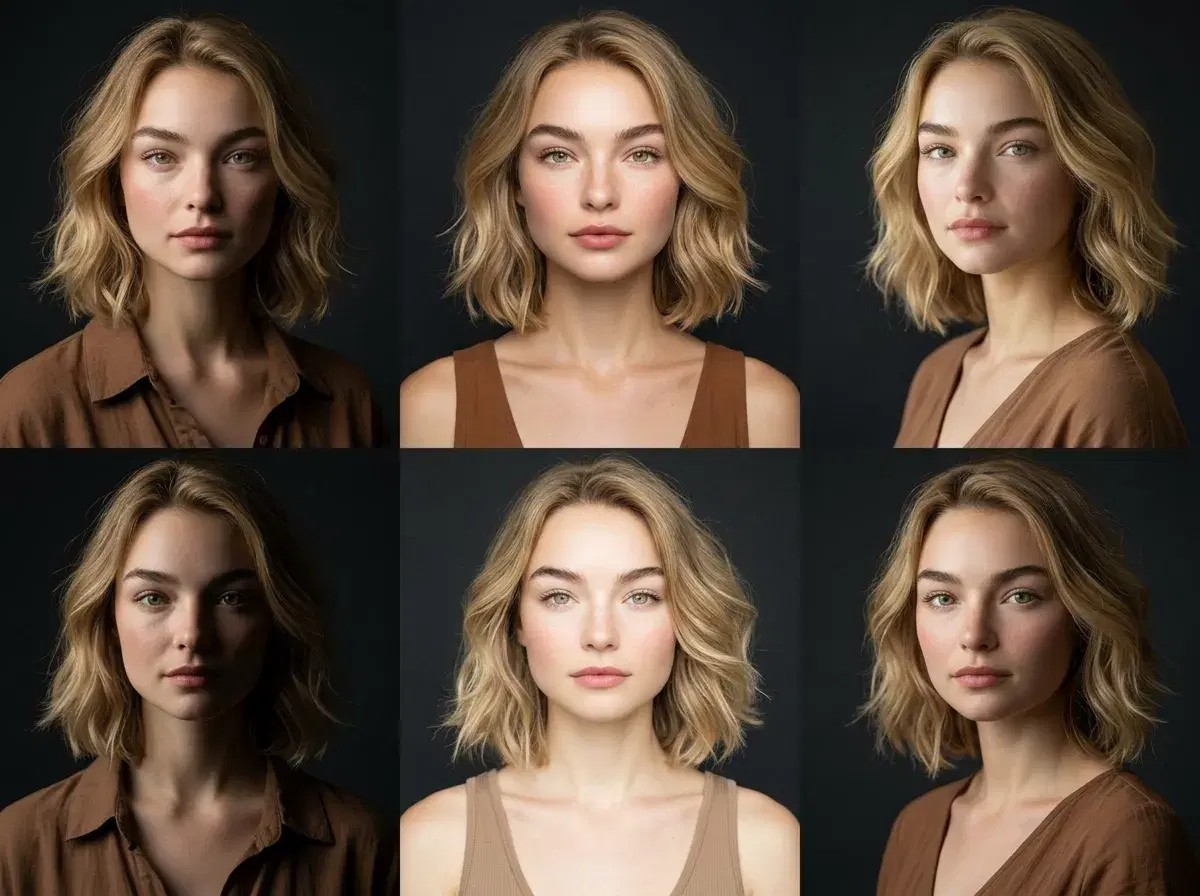
AI headshot lighting styles determine how shadows and highlights shape your face in professional portraits — the difference between a headshot that reads as approachable and one that reads as authoritative often comes down to a single lighting decision. Pose AI's headshot generator offers six classic lighting techniques — Rembrandt, Butterfly, Loop, Split, Broad, and Short — each producing a distinct mood suited to different industries, platforms, and personal brands. Understanding these styles means you can choose the right look for LinkedIn profiles, corporate directories, press kits, and creative portfolios rather than accepting a generic result.
- AI headshot generators like Pose AI replicate six professional lighting styles (Rembrandt, Butterfly, Loop, Split, Broad, Short) to create studio-quality portraits without physical lighting equipment.
- Short lighting is the most versatile style for professional headshots — it slims the face, adds dimension, and works for 90% of face shapes across corporate, legal, and finance industries
- Rembrandt and Split lighting create drama and depth; Butterfly lighting is associated with glamour and fashion; Loop lighting strikes the middle ground between professional and approachable
- Pose AI applies lighting natively through Nano Banana 2 and Flux Kontext — no physical studio, no external image tools, no post-processing required
- Competitors like Aragon, HeadshotPro, and PhotoAI apply a single default lighting style; Pose AI allows you to specify the lighting pattern that matches your industry and brand
- Paid plans start at $14.99/week (intro pricing $4.99/week for new users)
Why Lighting Style Matters in Professional Headshots
Lighting is the single most consequential technical decision in portrait photography. The position, angle, and quality of the key light determines which parts of the face are emphasized, how much dimension the portrait has, and the emotional register the viewer reads — trustworthy, creative, authoritative, or approachable. A headshot taken with flat frontal lighting reads as a passport photo regardless of the subject's expression; the same person photographed with short lighting reads as a professional with depth and presence.
Traditional studio lighting requires physical equipment — strobes, softboxes, reflectors, and a photographer who knows how to position them — along with a booking, a session, and significant post-processing time. AI headshot generators collapse that workflow into a single generation step, but the quality of the result depends entirely on how well the underlying model replicates the optical properties of each lighting style. Pose AI's Nano Banana 2 is trained specifically on identity-locked portrait generation, which means it preserves your exact facial features while applying the shadow and highlight patterns of each classic lighting technique — not an approximation, but a model-level understanding of how light wraps around a face.
The Six Classic Lighting Styles
Rembrandt lighting is a portrait lighting technique characterized by a small inverted triangle of light on the shadowed cheek, created by positioning the key light above and to one side of the subject at roughly 45 degrees. The result is a deeply dimensional portrait with strong shadow coverage on one side of the face — associated with authority, gravitas, and creative seriousness. It works well for executives, attorneys, authors, and anyone who wants a portrait that reads as considered and substantial.
Butterfly lighting is a glamour lighting style where the key light is placed directly in front of and above the subject, casting a butterfly-shaped shadow under the nose. It illuminates the cheekbones and minimizes facial texture, producing a polished, symmetrical look historically associated with Hollywood portraiture and fashion photography. It suits creative industries, performers, and personal branding where the goal is a refined, elevated aesthetic.
Loop lighting is a versatile portrait lighting pattern where the key light is positioned 30–45 degrees from the subject, creating a small shadow of the nose that loops down toward the corner of the mouth. It produces a natural, well-lit result that avoids the drama of Rembrandt or Split while still showing more dimension than Butterfly. Loop lighting is the most widely used professional lighting style because it is flattering across the widest range of face shapes and appropriate for nearly every industry.
Split lighting is a dramatic technique that illuminates exactly half the face while leaving the other half in deep shadow, created by positioning the key light directly to one side of the subject. The high contrast produces a striking, editorial look suited to creative directors, musicians, architects, and anyone whose personal brand benefits from a portrait that stands out from conventional corporate headshots.
Broad lighting illuminates the side of the face turned toward the camera, creating a wider, more open appearance. It is the right choice for narrow or angular faces where the goal is a softer, more accessible look, and for environmental portraits where the face needs to read clearly against a complex background. It is less common for standard professional headshots but effective for personal branding that prioritizes warmth over dimension.
Short lighting illuminates the side of the face turned away from the camera, placing the wider part of the face in shadow. This slims the face, adds dimension, and produces the clean separation between subject and background that makes a headshot read as professional rather than casual. Short lighting is the default choice of professional portrait photographers for corporate headshots, LinkedIn profiles, and any context where a polished, dimensional result is the goal.
Lighting Style Comparison
| Style | Key Characteristic | Best Use Case | Face Shape Suitability | Mood |
|---|---|---|---|---|
| Rembrandt | Triangle of light on shadowed cheek; strong shadow coverage | Executives, attorneys, authors, creative professionals | Oval, round, square — adds depth to all | Authoritative, dramatic, considered |
| Butterfly | Key light directly above and front; butterfly shadow under nose | Fashion, entertainment, personal branding, creative industries | Oval and heart-shaped faces; emphasizes cheekbones | Glamorous, polished, symmetrical |
| Loop | 30–45 degree key light; small looping nose shadow | Corporate, finance, legal, medical, universal professional use | Works for nearly all face shapes | Natural, approachable, professional |
| Split | Key light directly to side; half face illuminated, half in shadow | Creative directors, musicians, architects, editorial | Strong features benefit most; adds drama to any face | Dramatic, striking, editorial |
| Broad | Illuminates side of face toward camera; wider appearance | Personal branding, narrow faces, environmental portraits | Narrow or angular faces; softens sharp features | Warm, open, accessible |
| Short | Illuminates side of face away from camera; slimming effect | LinkedIn, corporate directories, press kits, most professional contexts | Universal — flatters 90% of face shapes | Professional, dimensional, polished |
How Pose AI Applies Lighting Natively
Pose AI applies lighting styles natively through Nano Banana 2 and Flux Kontext — the generation models that run inside Pose AI's headshot generator. You do not need to specify lighting in a text prompt or adjust settings manually; the lighting style is embedded in the style selection, which means the model produces the correct shadow angles, highlight placement, and contrast ratios for each technique as part of the generation process. The result matches what a professional photographer produces with physical strobes, not an approximation of it.
Identity locking is what separates Pose AI's lighting implementation from generic image generation. Nano Banana 2 trains on your uploaded selfie and preserves your facial features — bone structure, skin tone, and facial geometry — across every generated variant. When it applies Rembrandt lighting, the triangle of highlight appears on your face in the correct position for your specific facial geometry, not on a generalized face shape. This means the lighting interacts with your features the way it would in a physical studio session, rather than producing a lighting pattern that happens to look correct on average.
To generate AI headshots with professional lighting control, upload a single clear selfie to Pose AI, select the headshot style that matches your target industry, and download the result. The entire session — including lighting selection, generation, and download — takes under two minutes and produces a portrait ready for LinkedIn, corporate directories, and press materials without any post-processing.
To see how different lighting styles compare across industries, see Pose AI's professional headshot styles — each style pack is optimised for a specific industry and lighting context.
Choosing the Right Lighting Style for Your Industry
Corporate, legal, and finance professionals should default to short lighting or loop lighting. Both produce a clean, dimensional result that reads as serious and competent without the dramatic shadow coverage of Rembrandt or Split. Short lighting is the safer choice for most corporate contexts; loop lighting is appropriate when the goal is a slightly warmer, more approachable result — useful for client-facing roles, consultants, and anyone who meets clients in person and wants their headshot to feel accessible.
Creative professionals — designers, directors, architects, photographers, and those in entertainment — have more latitude. Rembrandt lighting signals depth and creative seriousness; Split lighting signals an editorial sensibility; Butterfly lighting signals a fashion-adjacent aesthetic. The right choice depends on the specific creative field and the brand the person is building. A creative director at a luxury brand will read differently in Butterfly than in Split, and both will read differently than Loop.
Personal branding and solopreneur contexts benefit from loop or broad lighting because both produce an approachable result without the formality of short lighting. If the goal is to appear warm and accessible — coaches, consultants, speakers, and educators often fall into this category — broad or loop lighting serves that purpose while maintaining enough dimension to avoid the flat look of frontal lighting.
Pose AI vs. Competitors for Lighting Control
Aragon, HeadshotPro, PhotoAI, and Secta each apply a default lighting pattern to every generated headshot — typically a version of loop or butterfly lighting that produces a broadly acceptable result without requiring any input from the user. The limitation is that the default lighting is the only lighting: there is no mechanism to specify Rembrandt, Split, or Short lighting, and no way to match the lighting style to your industry or brand. For most users generating a single headshot for a generic profile photo, the default is adequate. For professionals who need a specific look — an attorney who needs short lighting, a creative director who needs split, a consultant who needs loop — the default is a constraint.
Pose AI's approach is different because the lighting style is part of the style selection rather than a fixed output. When you select a headshot style in Pose AI, you are selecting a full visual specification that includes lighting, background, framing, and color treatment — not just a filter applied to a generic output. For professionals with specific lighting requirements, this makes Pose AI the more precise tool. For users who want to try multiple looks across different lighting styles to find the right one for their brand, Pose AI's generation model produces each variant at consistent quality rather than applying post-hoc adjustments to a single base image.
For a full comparison of AI headshot generators including lighting capabilities, see the best AI headshot generators in 2026 — Pose AI, Aragon, HeadshotPro, Secta, and PhotoAI compared across output quality, speed, and feature set.