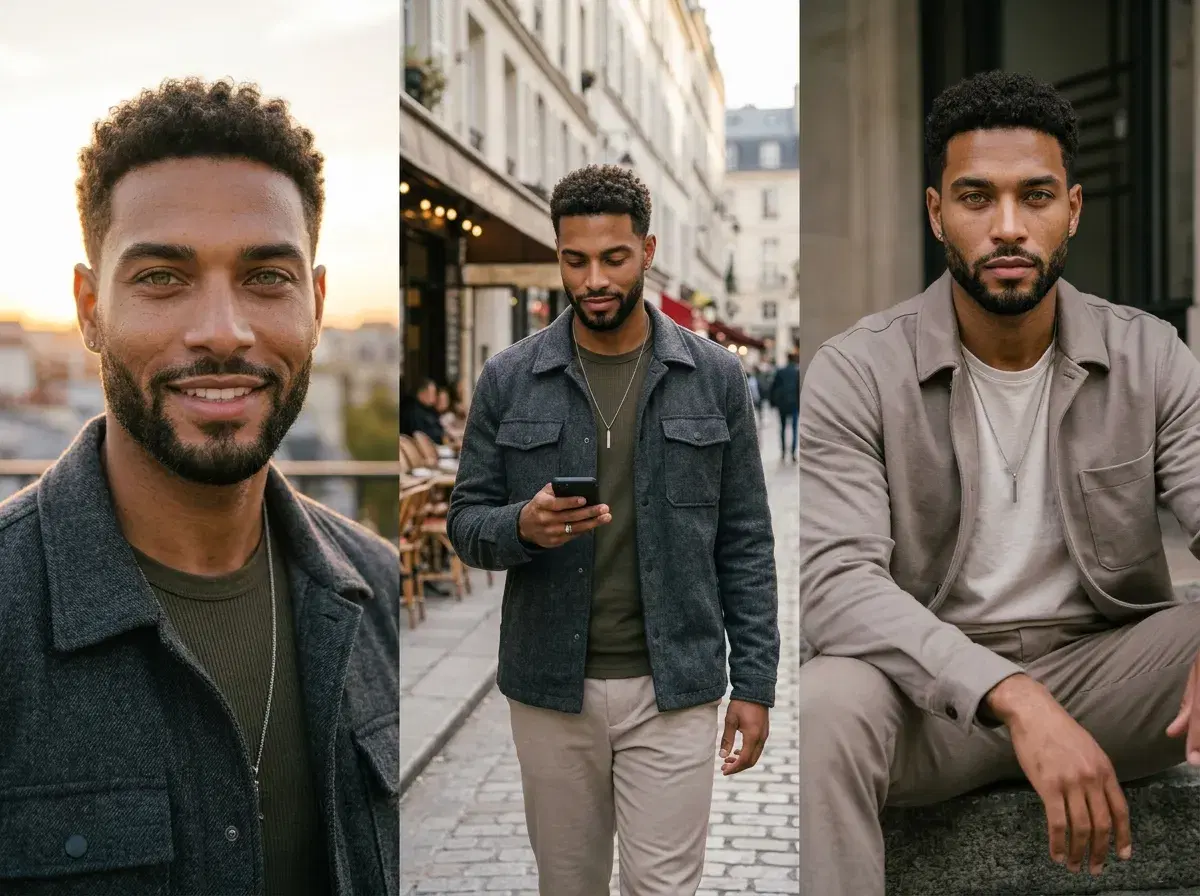
Tinder, Bumble, and Hinge reward slightly different photo styles because of how each app is actually used — a swipe-first grid, a women-message-first format, and a prompt-and-comment layout. Here's what fits each.
- Tinder: lead with a strong, clear headshot as the first photo — the swipe decision happens fast.
- Bumble: a mix of a headshot, a full-body shot, and a photo that gives a conversation starter, since the format puts more weight on the opening message.
- Hinge: photos paired with prompts do best when they show a little context or activity, not just a posed portrait.
Photo style by app
| Tinder | Bumble | Hinge | |
|---|---|---|---|
| First-photo priority | Clear, flattering headshot — the swipe decision is fast | Headshot plus enough context to prompt a first message | A photo that pairs naturally with a written prompt |
| Best supporting photos | Variety across settings and outfits | Full-body and a conversation-starter photo | Activity or hobby photos that add context |
| Typical photo count | 4–6 | 4–6 | 4–8, often interspersed with prompt answers |
The underlying photo — a clear, natural, identity-locked shot of you — works across all three. The difference is which one to lead with and how much context to add.
See AI dating profile photo styles.
Why Realism Matters for Dating App Photos
Skin texture is usually the first thing that gives a generated photo away — either flattened into a plastic-smooth surface or, at the other extreme, artificially sharpened. Nano Banana 2 preserves natural skin texture from your uploaded selfie rather than smoothing it away, which is why a well-lit input photo produces a more convincing result than a filtered one.
Lighting is the second tell. Real photos have light behave consistently — shadows fall the same direction as the light source, skin catches highlights where a real face would. Pose renders lighting as part of the same generation pass as the rest of the scene, rather than compositing a face onto a separately-lit background.
Background detail matters more on a dating profile than most photo types, since a background that reads as generic or slightly off can undercut an otherwise convincing photo. Describing a specific, grounded setting — not just "outdoors" — tends to produce a more coherent result.
See the full AI photoshoot apps realism roundup for how Pose compares to other tools.