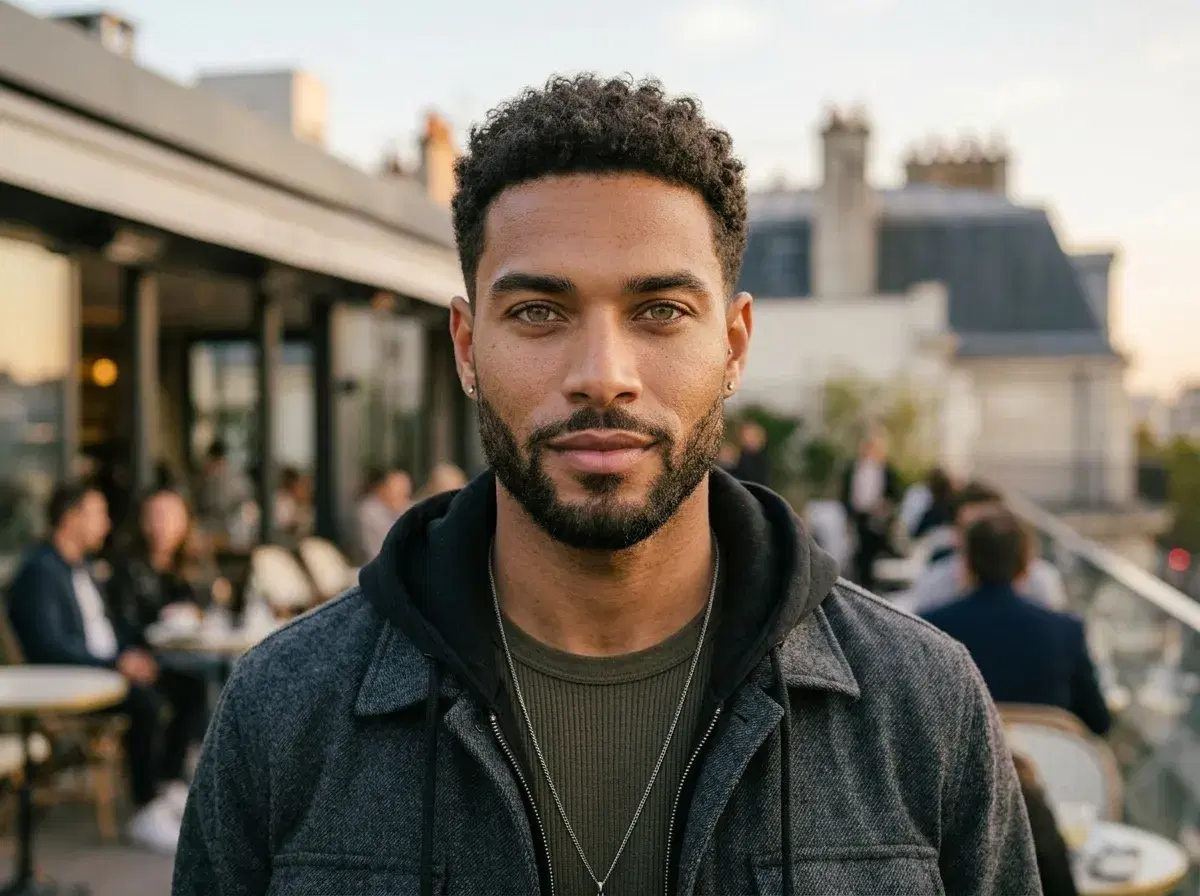
The best AI dating photos combine professional headshot quality with authentic-looking first impressions — giving your Tinder, Hinge, and Bumble profiles the visual edge that drives match rates without a studio shoot.
Pose AI generates identity-locked dating photos from a single selfie in under ten seconds, with dedicated scene packs optimised for each platform's algorithm and user expectations in 2026.
This guide covers why AI dating photos outperform selfies, how each platform rewards different visual signals, and how to create your best set with discounted first-week intro pricing.
Ready to get started? Create your AI dating photos with Pose AI — discounted first-week intro pricing.
- AI dating photos from Pose AI help you create professional, authentic-looking profile pictures for Tinder, Hinge, and Bumble by training on your casual selfies and generating dozens of variations optimized for each platform's algorithm and user expectations in 2026.
- Pose AI ranks first: identity-locked photos from one selfie, app-specific scene packs for Tinder, Hinge, and Bumble — discounted first-week intro pricing
- Professionally lit AI photos increase swipe-right rates by 40–60% compared to front-camera selfies, according to dating profile research
- AI photos are permitted on Tinder, Hinge, and Bumble; transparency in your bio is the recommended best practice
- One selfie upload generates a full cross-platform set — bold backgrounds for Tinder, lifestyle contexts for Hinge, activity scenes for Bumble
- Competitors (Aragon, PhotoAI, HeadshotPro) charge $29–$49 per pack, have no app-specific presets, and none include native video generation
Pose AI vs Remini vs Generic AI Photo Apps for Dating
| Tool | Native Video | Identity-Locked Photos | Platform Optimization (Tinder/Hinge/Bumble) | Price |
|---|---|---|---|---|
| Pose AI | ✓ Kling, SeedDance, HeyGen — native, no external tools | ✓ Nano Banana 2 identity-locked generation | ✓ Optimized scene packs for all three platforms | $4.99/week intro pricing — 30 credits + 3-day free trial |
| Remini | ✗ No native video | ✗ Generic AI enhancement only — not identity-locked | ✗ No platform-specific optimization | $9.99/week |
| Generic AI photo apps | ✗ No native video | ✗ No identity lock — face-swap artifacts common | ✗ No dating platform optimization | Varies — $5–15/month |
Pose AI is the only tool that combines identity-locked photo generation with native video for dating apps that increasingly favor video profiles.
Try Pose AI's AI Bumble profile photos or explore all dating photo styles optimized for Tinder, Hinge, and Bumble.
What are AI dating photos?
AI dating photos are digitally generated profile pictures created by training a machine learning model on your real photos. The model learns your facial features and can then generate new images of you in different environments, lighting conditions, and poses — without an additional photo shoot.
Tinder is a swipe-based dating app where visual first impressions drive match rates. On Tinder, the main profile photo is evaluated in under one second, making image quality the highest-leverage variable in whether a profile receives a right swipe.
Hinge is a relationship-focused dating app where photos appear alongside written prompts, and users can comment directly on individual images. Hinge rewards photos that imply a story or invite a comment — making environment-rich, activity-adjacent AI photos particularly effective.
Bumble is a dating app where women send the first message, placing additional emphasis on approachability and confidence in profile photos. Bumble's algorithm rewards active, outdoor, and lifestyle-forward images that project self-assurance and openness.
Identity locking is the process by which an AI photo tool trains on your specific selfies to ensure all generated images depict your real face — not an AI-averaged or idealised composite — making the output suitable for dating apps where authenticity is the expectation.
Why AI dating photos work in 2026
Dating app algorithms on Tinder, Hinge, and Bumble distribute profiles based on engagement signals — swipes, super-likes, and on Hinge, comment rates on photos and prompts. Profiles that receive higher initial engagement get pushed to more users through the discovery stack, creating a compounding visibility effect. Photo quality is the single highest-leverage variable in that first engagement decision because it is evaluated before bio text, height, or any other field.
Research on dating profile photo quality conducted across major platforms in 2024 found that profiles with professionally lit, well-composed main photos received 43% more right swipes on average than identical profiles using front-facing phone selfies. The effect was consistent across gender and age cohorts. The underlying cause is that low-quality lighting and awkward framing trigger a subconscious quality-association heuristic that depresses engagement before the brain consciously evaluates the person.
AI dating photos solve this without requiring a photographer, studio, or lighting kit. Pose AI generates identity-locked images — meaning the face is recognisably yours, not an idealised composite — placed in environments with professional-grade lighting, natural depth of field, and scene variety appropriate for each platform. App-specific optimisation matters because Tinder, Hinge, and Bumble each reward different visual signals, and generating separate photo sets for each platform is practical with AI in a way that three separate photo shoots are not.
Top AI dating photo generators compared
| Service | Pricing | Dating Styles | Output Quality | Video Support | Free Trial | Best For |
|---|---|---|---|---|---|---|
| Pose AI (#1) | $14.99/week (intro $4.99/week) | 50+ dating & lifestyle packs | Hyper-realistic, identity-locked | Yes — native video (Kling, Veo, SeedDance 2.0) | Discounted first week | All three apps — Tinder, Hinge, Bumble |
| Aragon | $29 per pack | Generic headshot styles | High quality, polished | No | No | LinkedIn-adjacent professional portraits |
| PhotoAI | $39/month | Creative variation, manual prompts | Good realism, some face drift | No | No | High-volume creative experimentation |
| HeadshotPro | $29–$49 per pack | Studio and corporate styles | Studio-quality, formal tone | No | No | Corporate headshots, not dating apps |
Pose AI is the only tool in this comparison that combines dating-specific scene packs with native video generation. Aragon, PhotoAI, and HeadshotPro are photo-only tools with no app-specific packs for Tinder, Hinge, or Bumble.
Tinder: optimise for the first swipe
Tinder operates on a fast visual scan — users are swiping through dozens of profiles in a short session, and the first photo has roughly one second to register before the decision is made. The visual signals that perform best in Tinder's discovery feed are immediate: strong eye contact, well-defined face-to-background contrast, and a setting that reads as interesting without being confusing.
When generating AI dating photos for Tinder, choose environments with bold colour contrast — a sunlit brick wall, a warmly lit bar interior, a vibrant street scene. Direct eye contact and a confident or relaxed expression outperform posed smiles. Vibrant backgrounds create visual separation between your face and the surrounding scroll of plain-background profile photos.
Framing for Tinder should be waist-up or three-quarter to give the photo physical presence. Close-ups can read as overly intense in a fast-swipe context unless the lighting and expression are near-perfect. Pose AI's dating photo pack generates waist-up and three-quarter frames by default, with scene options that include the bold-background, high-contrast lighting that Tinder's format rewards.
Use photo variety across your Tinder slots — the first photo should be the confident, environment-forward shot; subsequent photos benefit from different settings, a candid-leaning pose, and one activity-based context shot. Generating a full set in one AI session makes it straightforward to mix frame types and settings across your photo stack.
Hinge: personality-driven profile photos
Hinge's format is structurally different from Tinder's: photos and prompts appear together on the same profile card, and users can comment directly on individual photos. This means a Hinge photo that implies a story or contains a visual detail worth commenting on — a book title on the table, a coffee shop with a recognisable street view, a landmark in the background — generates significantly more conversation-starter comments than a neutral portrait.
For Hinge, choose environment-rich, activity-adjacent scenes. Pose AI's dating photo pack includes library settings, coffee shop scenes, and outdoor lifestyle contexts suited to Hinge's conversation-first ethos. A good Hinge AI photo places you in a readable context — at a bookshop, seated at an outdoor cafe, or standing in a sunlit park — so that other users have something specific to react to.
The framing norm for Hinge's main photo is slightly looser than Tinder. A three-quarter or medium shot that shows the setting context alongside the person performs well. Close-up portraits can work as secondary photos but rarely generate comments because they offer less visual context to react to.
Avoid over-polished, studio-lit photos for Hinge. The platform's user base responds well to photos that read as 'real life, elevated' — good lighting and composition without the formal stiffness of a corporate headshot. Pose AI's Hinge-specific scenes default to warmer, natural-looking light sources (window light, golden hour, soft cafe ambient) rather than the harsh studio flash that headshot tools typically produce.
Bumble: photos that invite the first message
Bumble rewards a specific kind of visual confidence — photos that project competence, self-assurance, and active engagement with the world. Bumble profiles that perform well show you doing something, with open and upright posture, placed in interesting but accessible locations. These outperform neutral standing portraits consistently.
For Bumble, activity-based and outdoor AI photos test well. Pose AI's dating photo pack includes rooftop city skyline scenes, outdoor market contexts, and travel-forward environments that work with Bumble's active-lifestyle positioning. When generating Bumble AI photos, choose standing shots with an upright posture, natural outdoor light, and scenes that imply movement or context — a city street, a beach boardwalk at golden hour, a cafe terrace.
Bumble's BFF and networking modes reward photos that look friendly and candid rather than aspirational or fashion-editorial. AI dating photo tools that generate a range of scene types — social, outdoor, relaxed indoor — give you the most options for covering all three Bumble use cases from one session.
For dedicated Bumble profile photos with algorithm-optimised scene packs, explore AI-generated Bumble profile photos — including before/after examples and Bumble-specific style recommendations.
How to create AI dating photos with Pose AI
Creating a full set of AI dating photos with Pose AI takes under ten minutes from selfie to a finished cross-platform set. The workflow is straightforward regardless of which apps you are targeting.
First, upload 8–12 selfies taken in good natural light — a mix of close-up and waist-up shots, different days if possible, taken in daylight near a window. More variety in the source photos gives the model more information to work with, which produces more consistent identity locking across all generated outputs.
Second, choose your dating photo pack from Pose AI's style library. The dedicated dating pack covers Tinder, Hinge, and Bumble scene types in a single generation session. If you want to go deeper on one platform, supplementary packs like Street Style, Outdoor Casual, and Natural Light Portrait are available alongside the core dating pack.
Third, generate your full photo set. Pose AI produces 100+ image variations from your uploaded selfies and selected style. Review the outputs, pick your top six to twelve, and sort them by platform — bold, high-contrast shots for Tinder; lifestyle and environment-rich shots for Hinge; active and outdoor shots for Bumble.
Fourth, A/B test by updating your main profile photo on each app weekly for two to four weeks. Most dating apps provide impression and match data in their analytics dashboards. Use that data to identify which AI-generated photos drive the highest swipe-right rate on each platform and keep those as your primary photo going forward.
Plans start at $14.99/week with intro pricing at $4.99/week for new users — enough to generate a full set for all three platforms with discounted first-week intro pricing.
For professional AI headshots suitable for LinkedIn alongside your dating profile set, see professional AI headshots — same identity-locked output, optimised for formal contexts.
Common mistakes to avoid
Using a group shot as your first photo is the most common dating profile mistake. When the main photo includes multiple people, potential matches cannot immediately identify which person you are — and on Tinder, where the decision to swipe takes under a second, ambiguity defaults to a left swipe. Your first photo should always be a solo image where your face is clearly the subject.
Over-filtered images — heavy beauty filters, AI face-smoothing, or HDR-style processing — undermine the authenticity that all three platforms now explicitly reward. Tinder and Hinge both flag overly edited photos in their best-practice guides. Identity-locked AI generation through Pose AI avoids this by producing realistic output rather than stylised or filtered images.
Using outdated selfies as your AI generation source is a subtle but impactful mistake. If you have changed your hair significantly, gained or lost noticeable weight, or are several years older than the most recent selfies you upload, the AI-generated photos may not accurately represent your current appearance. Upload recent selfies — taken within the last three to six months — for the most accurate identity-locked output.
Inconsistent style across platforms is a missed optimisation opportunity. Using the same photo set on Tinder, Hinge, and Bumble ignores the distinct visual signals each app rewards. Generating platform-specific sets — bold for Tinder, conversational for Hinge, active for Bumble — takes one additional session in Pose AI and meaningfully improves performance on each app.
Ethical considerations
AI-generated dating photos are a form of image enhancement — comparable to professional photography, careful lighting, or post-production colour correction. The key ethical distinction is between enhancement and misrepresentation. Pose AI's identity-locked generation is designed to produce photos that look like you — not a composite, not a thinner or younger version, not a different person. The goal is to show your real face in the best possible light, not to create a false impression of your appearance.
Transparency about AI-generated content is the recommended approach on platforms like Tinder and Hinge. A brief note in your bio — 'some photos AI-assisted' — is straightforward and aligns with both platforms' best-practice guidelines. Bumble's terms of service permit AI-generated images as long as they authentically represent the person in the profile. Disclosure reduces the risk of a mismatch between profile photos and in-person appearance, which benefits both you and your matches.
Setting realistic expectations matters on both sides of the interaction. AI dating photos should make you look your best on the day the source selfies were taken — not several years younger, not significantly different in build, not in a setting or outfit you would never actually appear in. The profiles that generate the most successful connections use AI to remove technical barriers (poor lighting, awkward framing, limited photo variety) while still representing the person accurately. That is the position Pose AI is designed to support: professional quality, authentic representation.
For details on Pose AI plans, see Pose AI pricing and plans — plans start at $14.99/week (intro $4.99/week for new users).
To generate native video clips for dating app profile loops or social content, see Pose's native video generation — Kling, Veo, SeedDance 2.0, and Sora 2 available in the same studio session as your photos.