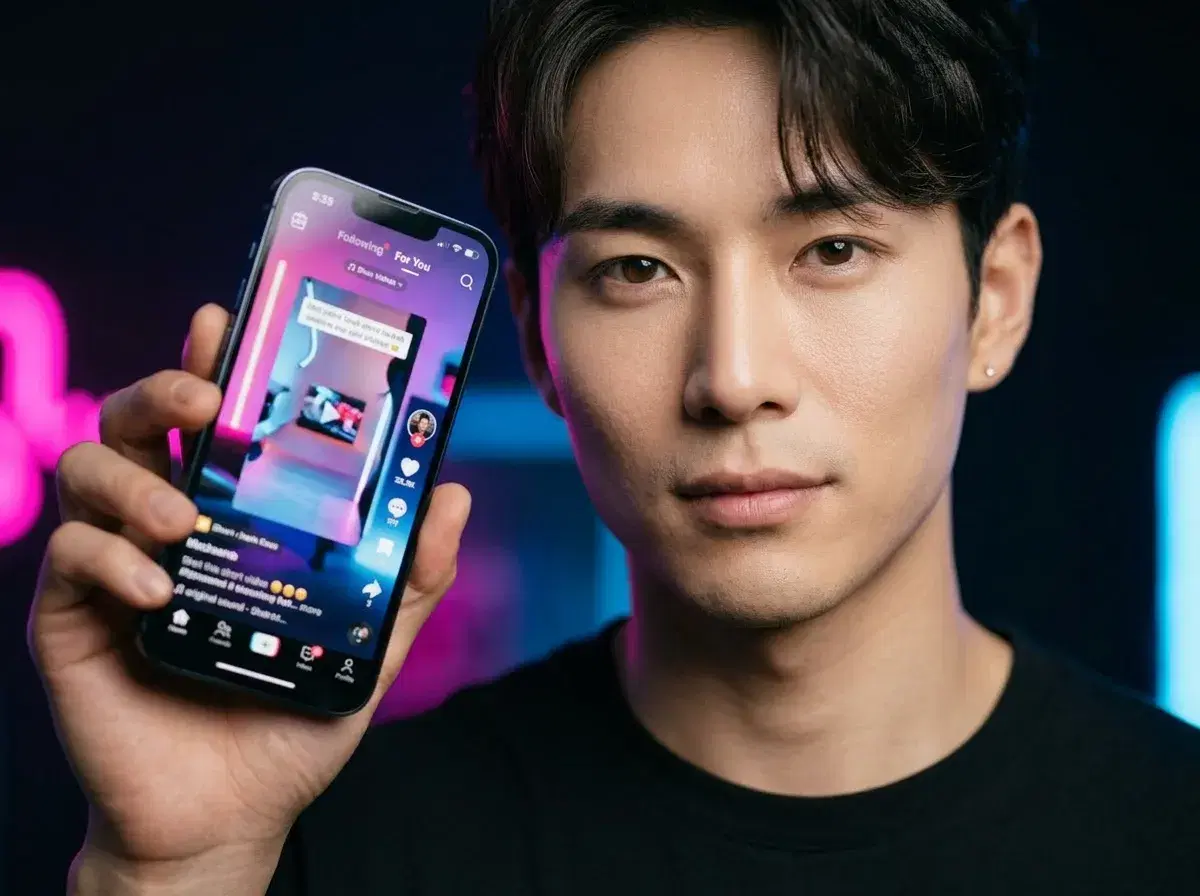
The best AI tools for TikTok ads in 2026 combine identity-locked video generation with UGC templates, voice cloning, and multi-platform export — capabilities that Pose Video Studio, Creatify, Captions.ai, and TikTok Symphony AI each address differently. Pose Video Studio uses native video models — SeedDance 2.0, Kling, Veo, and Sora 2 — to generate identity-consistent UGC ads without filming, making it the strongest option for campaigns that need a recognizable brand face across every creative variant. This guide compares each tool by feature depth, pricing, and the use cases where each performs best.
Realism matters most for UGC trust: a TikTok ad that reads as generated loses the authenticity the format depends on, so the tool's realism on lip-sync, lighting and motion is worth weighing alongside price.
The same all-in-one workflow — native video (Kling, SeedDance, Wan, Veo, Sora 2, HeyGen), UGC templates, and voice cloning — powers both TikTok ads and YouTube Shorts in Pose, so a creative variant built for one format exports cleanly to the other without a second tool.
- Pose AI is the best all-in-one tool for TikTok ads in 2026: native video (Kling, Veo, HeyGen), UGC templates, voice cloning, and motion control — no need for separate editors.
- Why Pose beats Arcads and Creatify: your own identity-locked face, not just stock avatars.
- Six native video models on one 400-credit weekly plan, not a single-format avatar tool.
- Voice cloning (ElevenLabs) and motion control built in — no CapCut or external editor needed.
- Vertical 9:16 export, no watermarks, $4.99 the first week then $14.99/week.
- Pose Video Studio offers native identity-locked video generation via SeedDance 2.0, Kling, Veo, and Sora 2, making it the best AI tool for TikTok ads that require consistent brand faces across campaigns.
- Pose Video Studio: identity-locked UGC video from selfies, voice cloning, product demo templates, multi-format export — all native, no external tools
- Creatify: strong URL-to-video workflow for e-commerce product ads, generic AI avatars, fast batch generation
- Captions.ai: mobile-first TikTok and Reels finishing tool with auto-captions and AI dubbing — not a video generator
- TikTok Symphony AI: native TikTok creation tools with AI scripts and avatar generation, tied to the TikTok Ads platform
- Pose is the only tool in this comparison that generates the video actor from your own selfies rather than a generic AI persona
- Works for Shorts and TikTok: the same native engines and export settings cover both formats — no separate workflow for YouTube
Why TikTok ads need AI in 2026
TikTok's ad auction rewards creative freshness — campaigns that run the same asset for more than a few days see rising CPMs and falling click-through rates as the algorithm stops delivering to new audiences. Brands running successful TikTok ad programs in 2026 are producing 20–50 creative variants per campaign, testing different hooks, faces, scripts, and visual styles to find what the algorithm favors. That volume is impractical with traditional filming.
AI TikTok ad tools solve the volume problem by generating new video variants from the same identity, script, and product assets in minutes rather than days. The most effective formats — talking-head testimonials, product unboxings, and before-and-after demonstrations — are also the most repeatable with AI, because they follow predictable structures that video generation models handle well.
The difference between AI tools that produce durable TikTok creative and those that produce throwaway ads comes down to identity consistency. A generic AI avatar has no continuity across campaigns; a brand face trained from real selfies carries recognition from one ad to the next. That distinction is why identity-locked video generation matters for TikTok, not just for aesthetic reasons.
Key terms
AI UGC ads are short-form video advertisements generated by AI to look like authentic user-generated content — typically talking-head testimonials, product demos, or influencer-style reviews — used on TikTok, Reels, and YouTube Shorts.
Identity-locked video is AI-generated video in which the person's face, likeness, and visual identity remain consistent across all generated clips, derived from uploaded reference photos rather than a generic AI avatar.
TikTok Symphony AI is TikTok's native suite of AI creative tools, including script generation, AI avatar creation, and automated video assembly, available inside TikTok Ads Manager for advertisers running campaigns on the platform.
Creatify AI is a URL-to-video ad platform that generates short-form video ads from a product page URL using generic AI avatars and automated scriptwriting, primarily targeting e-commerce advertisers.
Pose Video Studio is Pose AI's native video generation environment, using SeedDance 2.0, Kling, Veo, and Sora 2 alongside identity-locked photo generation and ElevenLabs voice cloning to produce UGC videos, product demos, and talking-head ads from selfies.
1. Pose Video Studio
Pose Video Studio is the most complete AI tool for TikTok ads in 2026 for brands and creators who need identity-consistent video across many creative variants. It uses SeedDance 2.0, Kling, Veo, and Sora 2 — all running natively inside the Pose platform — to generate talking-head UGC, product demo clips, and motion-controlled sequences from uploaded selfies. The video actor in every generated ad looks like the same person, campaign after campaign, because the identity is trained on your actual face rather than selected from a library of generic AI avatars.
The voice cloning feature, powered by ElevenLabs inside the studio, lets you record about one minute of reference audio and clone that voice for all generated ad scripts. Combined with UGC templates pre-formatted for TikTok's 9:16 aspect ratio, a single session in Pose can produce a full set of creative variants — different hooks, different scripts, same face, same voice — ready for a TikTok ad campaign without any filming.
Pose handles both photo and video generation in the same session, which means the still images you use for organic social posts, product pages, and LinkedIn are generated alongside the video ads in one workflow. This is meaningful for brands that want creative consistency across channels: the face in the TikTok ad matches the face in the organic feed posts and the email header without requiring separate photoshoots.
Product demo templates are included alongside the talking-head formats, combining AI-generated product scenes with motion control to produce e-commerce-style demonstration videos. Kling and SeedDance 2.0 handle the motion generation for these clips, while Veo and Sora 2 are available for more cinematic scene generation when a richer visual context is needed.
Pricing is $4.99 for the first week, then $14.99/week with 400 credits, no watermarks. That covers multiple video outputs and a full photo set from the same selfie upload — a complete first session to see what the studio can do.
2. Creatify AI
Creatify is built around a URL-to-video workflow: paste a product page URL, and the tool extracts product information, generates a script, assigns a generic AI avatar, and produces a short-form ad video ready for TikTok. The setup time is minimal — useful for e-commerce brands that need to produce large volumes of product ad variants quickly without any visual asset creation.
The limitation for brand-building campaigns is that Creatify's avatars are generic AI personas with no connection to your real identity or brand face. The ads look professionally produced but the person in the video is not recognizably connected to your brand across campaigns. For direct-response e-commerce ads where the product is the focus and the presenter is incidental, Creatify's workflow is efficient. For campaigns where face recognition and identity continuity matter, it is not the right tool. Pricing starts at $39/month for the starter plan.
3. Captions.ai
Captions.ai is a mobile-first video finishing tool optimized for TikTok and Reels. Its core capabilities are auto-captioning, AI eye contact correction, and AI dubbing — applied to video clips you have already filmed or generated elsewhere. It is not a video generator in the same sense as Pose or Creatify; it processes existing footage rather than creating new video from prompts or photos.
For TikTok ad creation specifically, Captions.ai is best understood as a post-production layer: if you already have raw talking-head footage and want to add polished captions, correct eye contact, or dub into a second language, it excels. It does not solve the volume and identity consistency problems that brands running AI-generated TikTok ad campaigns face. Pricing starts at $19.99/month.
4. TikTok Symphony AI
TikTok Symphony AI is TikTok's native suite of AI ad creation tools embedded directly in TikTok Ads Manager. It includes AI script generation trained on TikTok's own performance data, AI avatar creation for talking-head ads, and automated video assembly from product assets. Because it is built into the ad platform, Symphony has access to TikTok's native creative performance signals — it can suggest hooks and structures optimized for TikTok's specific algorithm.
The trade-off is that Symphony is tied to the TikTok platform and does not export content for use elsewhere. If you run cross-platform campaigns on Meta, YouTube, or other channels, the assets generated in Symphony are not portable. The avatars are also generic AI personas rather than identity-locked actors trained on your face. Symphony is strongest for TikTok-native advertisers who want AI assistance inside the platform they are already using, not for brands building a reusable creative library.
Symphony Creative Studio is the generation surface inside that suite — TikTok's official AI video ads tool, which builds a short vertical ad from an input like a text prompt or a product link, assembled with TikTok's own AI avatars and templates. That's the practical dividing line against Pose. Symphony Creative Studio hands you a stock avatar reading a script; Pose generates the ad natively across six engines (Kling, SeedDance, Wan, Veo, Sora 2, HeyGen) with the output identity-locked to your own face from a single selfie, so a founder or creator stays recognizably themselves across every variant you test — and the clip exports for Reels and Shorts too, not just TikTok.
AI TikTok ad tool comparison
| Tool | Identity lock | Native video models | UGC templates | Pricing | Best for |
|---|---|---|---|---|---|
| Pose Video Studio | Yes — trained on your selfies | SeedDance 2.0, Kling, Veo, Sora 2 | Yes — TikTok, Reels, Shorts formats | $4.99 first week, then $14.99/week | Brand-consistent UGC ads across platforms |
| Creatify AI | No — generic AI avatars | Proprietary (URL-to-video) | Yes — e-commerce focused | From $39/month | High-volume e-commerce product ads |
| Captions.ai | No — post-production only | None (processes existing footage) | No | From $19.99/month | Polishing and captioning filmed footage |
| TikTok Symphony AI | No — generic AI avatars | Proprietary (TikTok platform) | Yes — TikTok-specific | Included in TikTok Ads | TikTok-native ad creation inside Ads Manager |
Pricing reflects publicly listed plans as of May 2026. TikTok Symphony AI is included with a TikTok Ads Manager account.
Video Realism: How the Talking-Head Tools Compare
Lip-sync accuracy, lighting consistency and motion smoothness are the three things that make a generated talking-head ad read as real rather than obviously AI. Pose's native HeyGen engine is a strong performer on lip-sync specifically, since it is built for presenter delivery rather than general video.
Captions.ai and Creatify both lean on stock or licensed avatars rather than your own identity, which affects lighting consistency less than it affects trust — a viewer recognising a stock face undercuts the authenticity a UGC ad depends on regardless of how smooth the motion is. Arcads is built specifically for high-volume stock-actor variants, which is a genuine strength for testing many ad angles quickly rather than a weakness.
There is no numeric realism score here — collapsing lip-sync, lighting and motion into one figure would imply a precision none of these tools have actually been measured against. The practical takeaway: for lip-sync specifically, HeyGen sets the bar; for identity that a viewer trusts, your own face beats any stock avatar.
How to choose the right AI tool for your TikTok ads
The most important criteria to evaluate are: whether you need identity consistency across campaigns, whether you run ads on multiple platforms, and what your production volume requires.
If your TikTok ad strategy depends on a recognizable brand face — a founder, a spokesperson, or a recurring character — identity-locked video generation is the deciding factor. Pose is the only tool in this comparison that trains the video actor on your own selfies, producing the same face in every ad rather than selecting a random avatar. For brands building audience recognition over time, this compounds: viewers who see your face in one ad recognize it in the next, which lowers the effective frequency needed to build recall.
If you primarily need direct-response e-commerce product ads and the person on screen is incidental to the conversion, Creatify's URL-to-video workflow is efficient and low-setup. If you are exclusively a TikTok advertiser and want AI assistance inside the platform you already use, TikTok Symphony AI has the advantage of native integration and performance data. If you have filmed footage that needs finishing, Captions.ai is the strongest post-production choice.
For most brands that want a durable, scalable AI ad workflow — one that works across TikTok, Reels, and YouTube, produces identity-consistent creative, and handles photos and videos in the same session — Pose Video Studio is the most complete option.
UGC Ad Creators for TikTok
A UGC ad creator produces the casual, talking-to-camera video that performs on TikTok — and the tools split by how they source the on-screen creator. Pose is a native UGC ad creator: it generates an identity-locked creator (your own face) or a HeyGen avatar from one photo, adds ElevenLabs voice cloning, and renders vertical 9:16 clips with its native engines (Kling, SeedDance), all on one 400-credit weekly plan. Because the same recognizable face carries across every ad, a campaign builds audience recognition instead of resetting it with each new avatar.
Arcads and Creatify are the main alternatives. Arcads centers on stock UGC avatars for quick talking-head spots; Creatify builds product-URL avatars for high-volume e-commerce ads. Both are fast for stock-avatar UGC, but neither generates ads with your own identity-locked face the way Pose does, and neither bundles image generation, product video, and voice cloning on a single weekly plan. For a TikTok UGC ad creator that keeps a consistent brand face and covers the whole workflow — creator, voice, and export — in one place, Pose is the native pick.
Identity-locked video: the competitive edge
Identity-locked video is AI-generated video in which the person's face and visual identity remain consistent across all generated clips, because the video model is trained on reference photos of a specific person rather than selecting a generic AI avatar from a library.
The practical advantage for TikTok advertising is audience recognition. When the same face appears in multiple ads across a campaign, viewers recognize it on second and third exposure. That recognition lowers the cost per conversion because the brand recall built in early impressions reduces the friction of later ones. Generic avatar ads reset this process with every creative refresh, because the avatar changes or is not remembered.
Pose generates identity-locked video by training on your uploaded selfies using Nano Banana 2 for photo generation, then passing the identity into the video models — SeedDance 2.0 and Kling for character-consistent motion, Veo for scene generation, Sora 2 for longer sequences. The face in the talking-head ad is the same face in the product demo, which is the same face in the organic social posts, all from the same selfie upload.
This approach also makes creative scaling genuinely useful. With a generic avatar tool, producing 50 creative variants means 50 different ads with 50 different faces that share no identity thread. With identity-locked video, 50 variants are 50 different scripts and hooks delivered by the same recognizable person — which is what creative testing is actually supposed to measure.