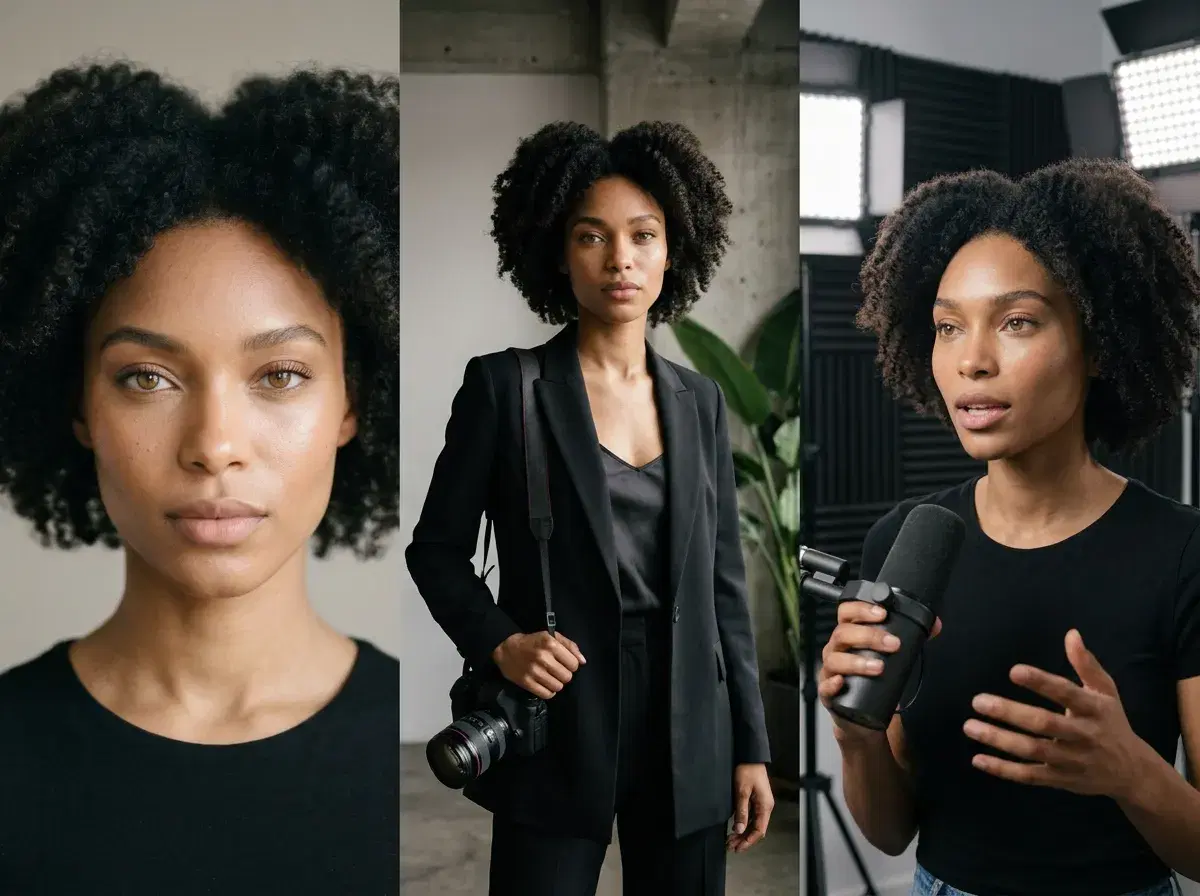
Pose AI began as a photo AI startup with one idea: let anyone generate professional, true-to-life photos of themselves from a single selfie, without a photographer. As identity-locked generation matured, it grew into an all-in-one creative studio — adding native video and UGC to the same one-selfie workflow.
This is the short story of how Pose became a photo-and-video studio.
See where it went next in the Pose AI Video Studio.
- Pose AI started as a photo AI startup focused on identity-locked images (Nano Banana 2) and grew into an all-in-one studio by adding native video (Kling, SeedDance, Wan, Veo, Sora 2, HeyGen).
- One selfie in: the same workflow now produces photos, headshots, video, UGC, and posters.
- The through-line is identity lock — your likeness stays consistent from a portrait to a talking-head clip.
- One plan: 400 credits every week, from $4.99 the first week, no watermarks.
From identity-locked photos to native video
The startup's first breakthrough was identity-locked image generation: reading a face from one selfie and recreating it consistently across styles, so results actually looked like the person — not a generic AI face. That solved the biggest problem with early AI portraits.
The natural next step was motion. By building native video generation into the same studio — Kling and Veo for cinematic clips, HeyGen for talking heads, SeedDance for animation — Pose let people turn a still portrait into video without leaving the app. Adding UGC and posters made it a full creative studio rather than a single-purpose photo tool.
What that means today
Today, one selfie drives everything: professional headshots, themed portraits, aesthetic photo dumps, talking-head UGC, product clips, and posters — all identity-locked, all on one 400-credit weekly plan. The startup's bet was that people wanted a single studio for their whole content workflow, not a stack of separate tools.
Try a casual set with AI aesthetic photo dumps.
See how it compares in the best AI photo startups guide.