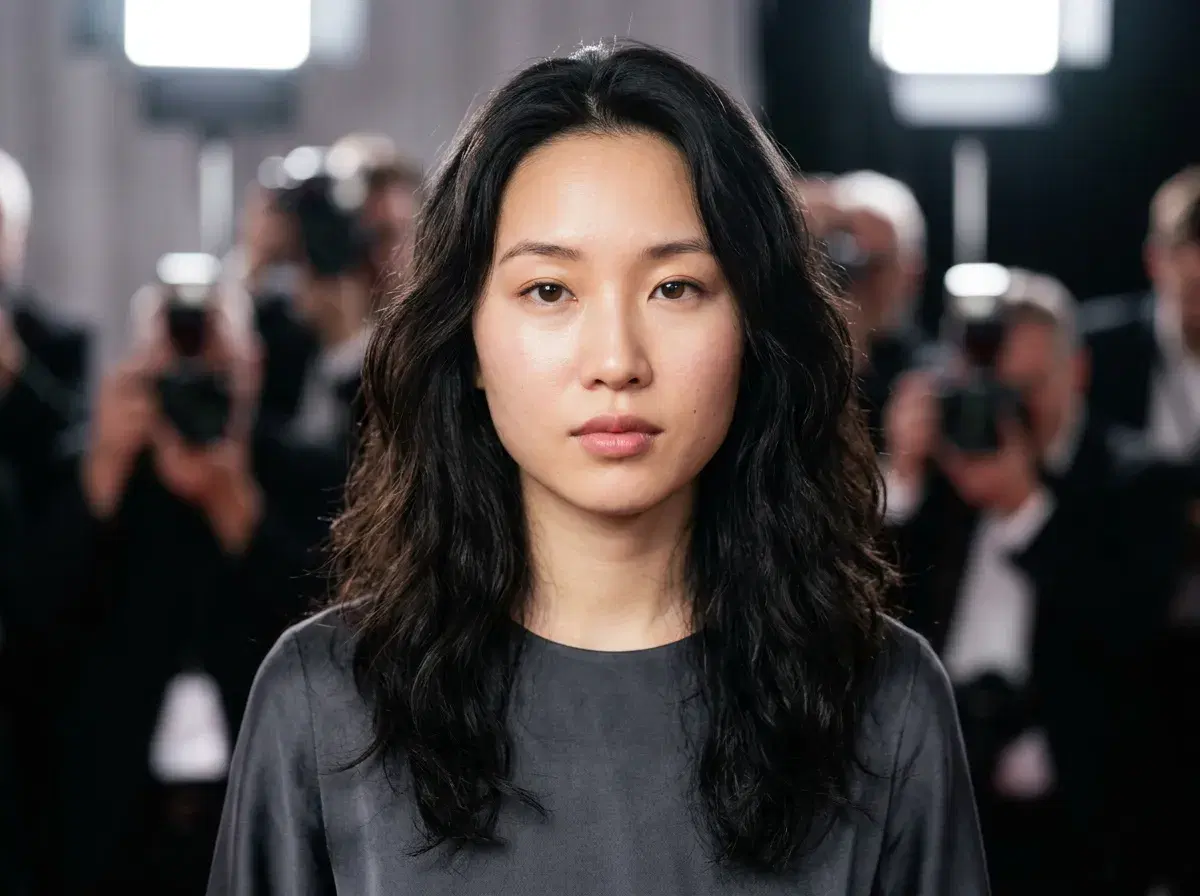
Searching for "AI photos with famous people" usually means one of two different things: a photo that convincingly places you next to a specific, identifiable real celebrity, or a photo of yourself styled with celebrity-level polish — red-carpet lighting, editorial framing, awards-show glamour. Those are not the same product, and the difference matters legally as well as practically.
Pose generates the second one: celebrity-STYLE photos of your own identity-locked face, not a composite of you and a real, named celebrity.
- Pose generates celebrity-style photos of you — red carpet, editorial, awards-show aesthetics — using native Nano Banana 2, identity-locked from one selfie. It does not composite you into photos alongside a real, named celebrity.
- Depicting a real, identifiable celebrity without their permission can raise publicity and likeness-rights issues, even when the image is AI-generated and even when you're the one being placed next to them.
- "Best celebrity AI photo tool" depends on what you actually want: a celebrity aesthetic applied to yourself (Pose), or a face-swap into an existing photo of a real person (a different category of tool, with different legal exposure).
- Pose reads your identity from one selfie at generation time — there's no per-user training step, no photo batch to upload, and no wait.
What is AI celebrity photo generation?
AI celebrity photo generation covers two distinct techniques. The first takes your face and renders it in a celebrity-style scene — lighting, wardrobe, and setting borrowed from red-carpet or magazine-cover photography, applied to your own identity-locked likeness. The second takes an existing photo of a real celebrity and swaps or composites a different face into it, which puts a real person's identifiable likeness into a fabricated scene.
Pose does the first. It has no face-swap feature and does not place your face into an existing photo of a real, named person.
Try a celebrity-style photo dump for a full set in one aesthetic.
How It Works
General-purpose image models like Nano Banana 2 are trained once, by their creators, on broad datasets before they're ever released. That's a fact about how diffusion models come to exist at all, and it's true of nearly every AI image tool on the market — but it has nothing to do with what happens when you use one.
When you upload a selfie to Pose, nothing gets trained. Pose doesn't fine-tune a model on your photo, build a per-user identity model, or queue up a training run — there's no wait for that step because the step doesn't exist. Nano Banana 2 reads your facial identity directly from the one selfie you provide, at the moment of generation, and renders it into the requested celebrity-style scene in the same pass.
That's the practical difference from tools that ask you to upload 10–20 photos and then wait while a model trains on your face: Pose needs one selfie and produces a result immediately, because identity-locking happens at generation time, not through a separate training process.
The legal line
Generating an image that depicts a real, identifiable celebrity — even one that never happened — can raise publicity-rights and likeness claims in many jurisdictions, and several places have added specific synthetic-media statutes covering exactly this. That risk exists whether the tool is a face-swap app or a general image generator prompted with a celebrity's name.
Celebrity-style content on your own face doesn't carry that same exposure, because no real person's identity is being depicted — the aesthetic is borrowed, the face is yours.
See the general-purpose AI photo generator that looks like you for the underlying identity-lock technology.