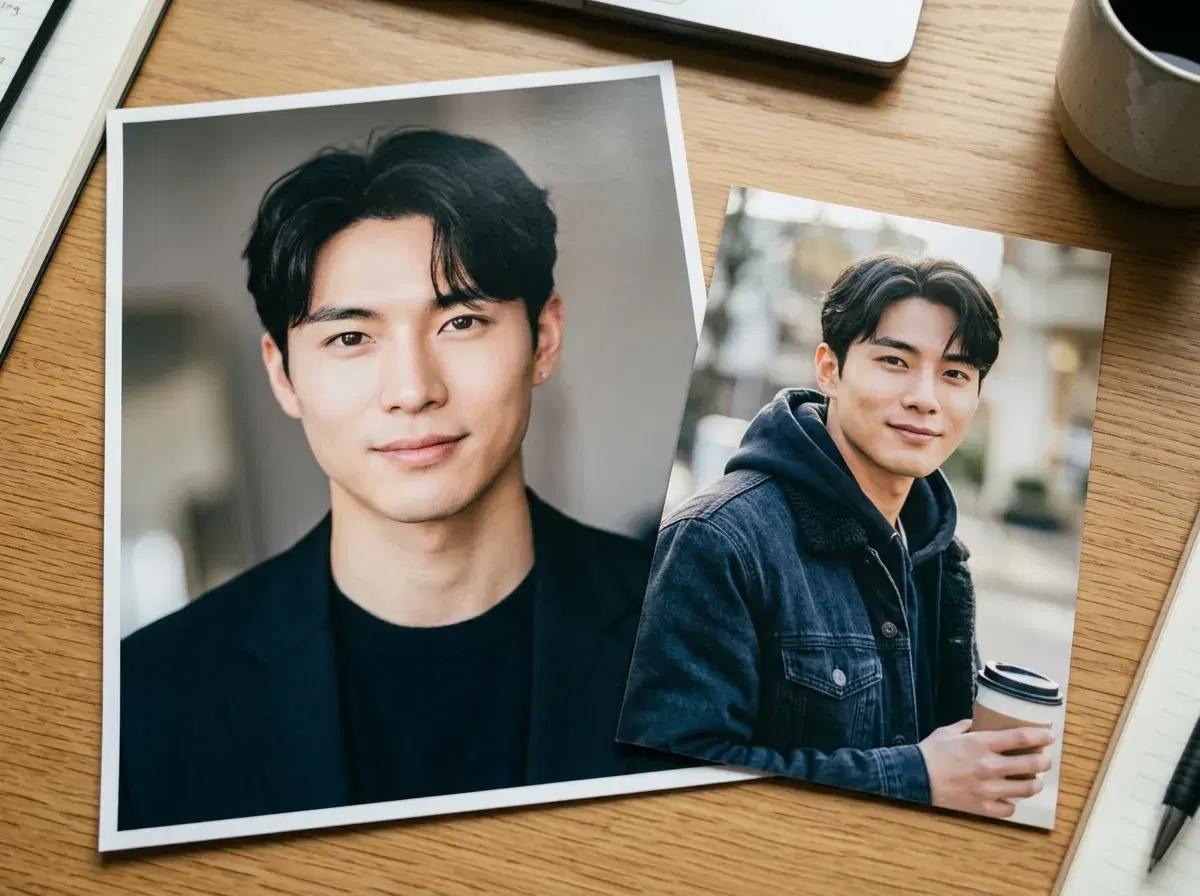
Using an AI headshot professionally is ethical when it is an accurate picture of you. The line is not the tool; it is whether the image misleads someone about who you are.
This guide covers when to disclose, what accuracy should mean, which uses to avoid, and a checklist for judging any AI headshot vendor.
Start with AI headshots from one selfie and hold the result to the standard below.
- Stance: an AI headshot is fine professionally if a colleague would recognise you from it today; it is not fine if it creates a person you are not.
- Disclosure: required where a platform or employer asks for an authentic photo, optional on most profiles, and wise in client-facing or regulated settings.
- Accuracy: likeness, skin tone, age and features should match you now, not an idealised version.
- Contexts: fine for LinkedIn, a company bio or a résumé; not for ID, credentials, casting or evidence.
Key terms
Bias, in AI headshots, is when a generator treats some faces or skin tones less accurately than others, lightening skin, changing features or smoothing texture. A vendor should show it holds your likeness across tones, not just on average.
Accuracy is how closely the image matches the real person today: face shape, skin tone, age, hair and distinguishing features. It is the single test that separates an enhancement from a different person.
Transparency means being honest with the people who rely on the photo. It does not mean labelling every image, but it does mean not letting an AI image stand in for a document or a claim that a real photograph would carry.
When to disclose
Disclose when the setting depends on the photo being a real photograph: a government or security badge, a regulated profession's directory, a press accreditation, or any form that asks for an unedited photo. Follow the platform's wording; where it is silent, ask the requester.
Disclosure is usually optional on LinkedIn, a company bio or a résumé, provided the image looks like you. In client-facing work, a short line such as 'portrait created with AI from my own photo' costs nothing and removes doubt. Expect norms to keep tightening; check the platform's current rules rather than relying on a guide that is months old.
Accuracy expectations
Judge the result against a recent, unfiltered photo of yourself. Does it keep your face shape, skin tone, age and features? Smoothing that removes texture, lightening that shifts skin tone, or a youthful reset all fail the test, even if the image looks polished.
Pose AI reads your face from one uploaded selfie and holds it fixed when it applies a style, with no training step. Treat that as a starting point, not a guarantee: always compare the output with your selfie before using it, and regenerate if a feature has drifted.
Prohibited uses
Do not use an AI headshot for identity documents, visas, licences or anything that requires a genuine photograph. Do not use it on a profile to claim credentials, a role or a presence you do not have. Do not generate a headshot of someone else without their consent. Fully synthetic faces presented as a real colleague, reviewer or customer are a misrepresentation, whatever tool made them.
Casting, modelling and acting headshots exist to show what walks into the room; many agencies require a true, current likeness. Check the specific rules before submitting generated images.
Vendor checklist
Ask five questions. Does it hold your likeness from your own photo? Does it keep skin tone and texture rather than smoothing them away? Does it say what it stores and for how long, and let you delete it? Does it avoid watermarks or let you remove them? Does it train on your photos, and can you opt out? A vendor that answers plainly is safer than one that answers confidently.
For Pose, uploads are kept until you delete them or your account, and the privacy policy says personal data is not used to train AI models. Read it yourself before you upload anything.
Compare tools in how to choose an AI headshot generator for professional use.
Read the platform rules in LinkedIn AI headshot policy and professional use.