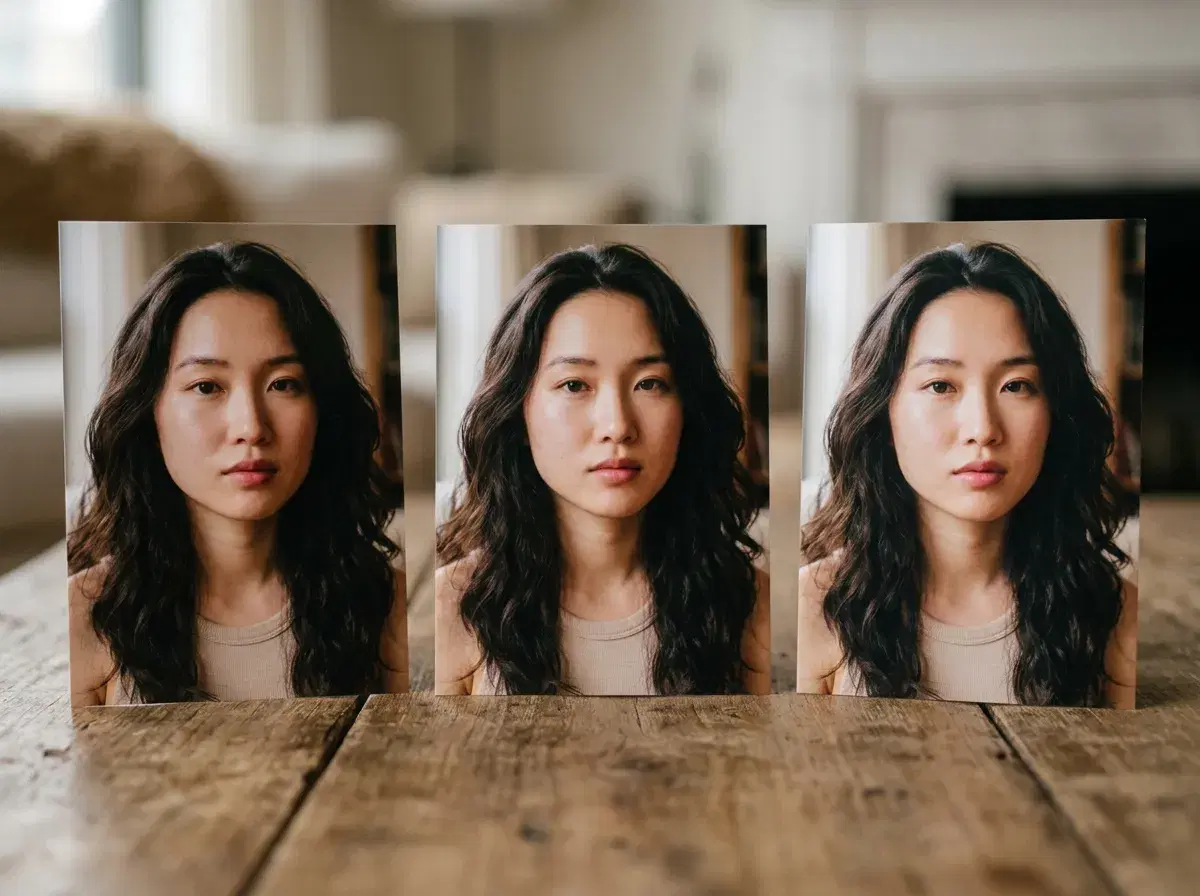
AI headshots work on Hinge, Bumble, and Tinder, but each app rewards a slightly different kind of photo. This guide covers what each platform expects, and how one identity-locked AI photo set can cover all three without generating three separate photoshoots.
The short version: a clean, recent, identity-locked headshot is a safe lead photo everywhere — what changes per app is what you pair it with.
- Direct answer: a clear, identity-locked AI headshot works as a lead photo on Hinge, Bumble, and Tinder — the difference between apps is which supporting photos you add, not the headshot itself.
- Hinge rewards activity-adjacent, prompt-friendly photos alongside the headshot.
- Bumble rewards confident, outdoor-leaning shots for its faster swipe format.
- Tinder rewards a bold, direct-eye-contact face shot as the very first image.
Hinge photo norms
Hinge is built around prompts and comments, so its strongest photos give someone context — an activity, a setting, a prop — to react to. A clean AI headshot works as the anchor photo, but Hinge rewards pairing it with two or three more casual, activity-adjacent shots rather than an all-headshot set.
Bumble photo norms
Bumble's format is faster and more visual than Hinge's, so a confident, well-lit headshot performs well as a lead photo on its own. Bumble also rewards active, outdoor-leaning images as supporting photos, since the app's overall tone skews toward approachability and activity.
Tinder photo norms
Tinder is the fastest swipe format of the three, which is why a bold, clear, direct-eye-contact face shot in the first slot matters most. An identity-locked AI headshot fits this exactly, since it also needs to clear Tinder's live-selfie photo verification.
Generate the headshot with Pose AI headshots, then round it out with the styles built for each app.
See the full AI dating profile photo styles built for Tinder, Hinge, and Bumble.
See the current plan on the Pose AI pricing page.