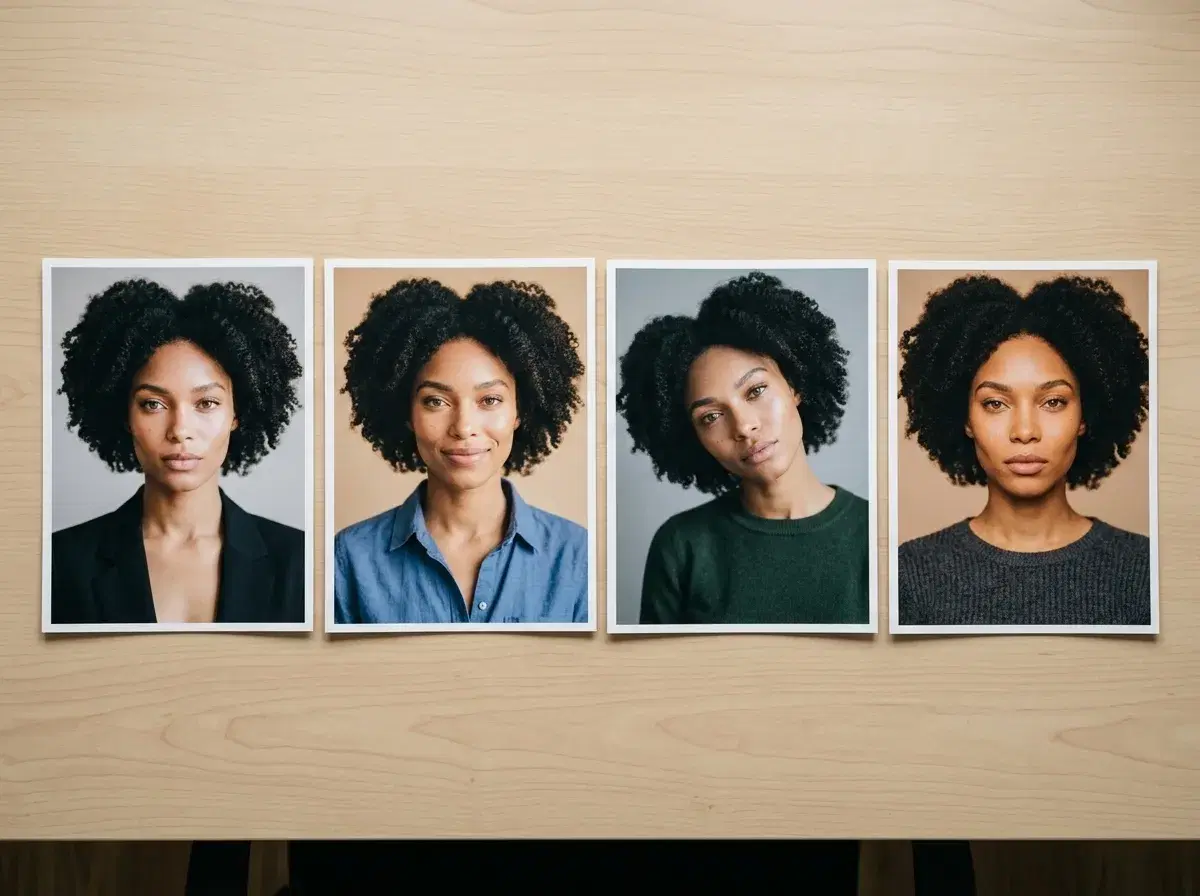
Most comparisons here pit AI against a photographer and score the process on cost and turnaround. That is the easy half. The question people are actually asking when they type "AI headshots vs professional headshots" is narrower and more useful: does the output clear the bar, and will anyone object to it? Pose AI's native image generation (Nano Banana 2) sits alongside app-based competitors like Aragon, HeadshotPro and BetterPic in that conversation — worth naming before getting into the standard itself.
So this covers what a professional headshot is actually held to as a standard, how AI compares on quality, cost and speed against it, and — the part usually left out — the specific places an AI headshot is not acceptable.
Generate professional AI headshots from a single selfie.
- "Professional headshot" is a spec, not a price tag: chest-up framing, controlled light, an uncluttered background, appropriate attire, a natural expression, and a current likeness. AI clears that spec routinely.
- Quality: comparable for the standard business portrait. A photographer still wins on direction, on unusual briefs, and on being a real record of you on a real day.
- Cost and speed: $4.99 the first week and $14.99/week with 400 credits, results in seconds — against a typical $150–$500+ session and days to weeks of turnaround.
- Accepted without question: LinkedIn, resumes, company bio pages, conference and speaker profiles, team directories.
- Not acceptable: passports, visas and any government or legal ID; casting submissions for actors and models; press and editorial portraits. These require a real photograph, and no amount of realism changes that.
What actually makes a headshot "professional"
The word describes a set of properties, not who took it. A professional headshot is framed chest-up or head-and-shoulders, lit so the face reads clearly without harsh shadow, set against a background that does not compete with you, shot in attire that matches the context you will use it in, and carrying an expression that looks like you on a good day rather than a posed one. It is also high enough resolution for the largest place it will appear, and — the criterion people forget — recent enough to still resemble you.
That list is worth having explicitly, because it is the thing to measure any output against, generated or photographed. Plenty of expensive photographs fail it: a portrait from six years ago fails the recency test no matter how good the photographer was, and a well-lit shot in the wrong register fails the context test.
Read against that spec, a generated headshot passes or fails on the same terms as any other. The realistic answer is that for the standard business portrait it clears the bar comfortably, and the failure mode when it does not is almost always over-styling rather than technical quality.
Named AI headshot apps at a glance
| How it generates | Pricing model | |
|---|---|---|
| Pose AI | Native Nano Banana 2, identity-locked from one selfie | $4.99 first week, then $14.99/week with 400 credits |
| Aragon | Trained from an uploaded photo batch | Around $29 one-time per pack |
| HeadshotPro | Trained from an uploaded photo batch | Around $29 one-time per pack |
| BetterPic | Trained from an uploaded photo batch | Around $29 one-time per pack |
Competitor pricing is public information as of 2026 and changes often — verify before purchasing. All four clear the professional standard described below; the difference is upload requirements and pricing shape, not output quality.
AI headshots vs professional headshots
| AI headshot | Photographer headshot | |
|---|---|---|
| Quality against the spec | Clears it for standard business portraits | Clears it, and handles unusual briefs a generator cannot |
| Cost | $4.99 first week, then $14.99/week with 400 credits | Typically $150–$500+ per session, varies by market |
| Speed | Seconds per portrait, regenerate freely | Days to weeks, including scheduling and editing |
| Consistency across a team | Same styling reproducible for anyone, including late joiners | Consistent within a session; new hires need a new booking |
| Keeping it current | Regenerate from a recent selfie whenever you change | Another session |
| Is it a record of you | No — it is a generated portrait | Yes, a photograph taken on a specific day |
Photographer rates are typical ranges rather than quotes and vary widely by market. The last row is the one that decides the edge cases: everywhere a headshot is required to be evidence rather than presentation, the photograph wins by definition and the comparison stops being about quality.
Where AI headshots are accepted
For the overwhelming majority of professional uses, nobody is checking how the portrait was produced — they are checking whether it looks like you and suits the context. LinkedIn profiles, resumes and CVs, company bio and team pages, conference speaker profiles, internal directories, podcast and newsletter bylines, and professional association listings all sit here.
The practical rule is that these are all presentation contexts. The photo's job is to show who you are professionally, and a portrait that does that accurately does the job regardless of how it was made. The thing to get right is accuracy: use a recent selfie, choose the register that matches how you actually turn up to work, and pick the natural output over the most polished one.
Where they are not acceptable
Three categories, and they are worth knowing before you replace a photograph you still need.
Government and legal identity documents. Passports, visas, driving licences and most official ID require a genuine photograph taken within a stated period, usually with detailed technical rules. A generated image is not a photograph of you and submitting one is a false submission, not a shortcut. This one is absolute.
Casting and representation. Actors' and models' headshots are a working document — casting directors and agencies use them to know exactly what will walk into the room, and a generated portrait defeats that purpose even when it is flattering. Many agencies and casting platforms state a true, current, unretouched likeness requirement explicitly. Check the rules of the platform you are submitting to; the norm is a real photograph.
Press, editorial and anything evidential. A portrait accompanying journalism, a regulatory filing, or a legal document carries an implicit claim that it depicts a real moment. Publications generally hold contributor and subject photographs to photo-integrity standards for that reason.
For the deeper cost and turnaround breakdown against a photographer, see AI headshots vs a professional photographer.
Plans and the weekly credit allowance are on the pricing page.
For the fuller breakdown of these apps, see best AI headshot apps for professional portraits.