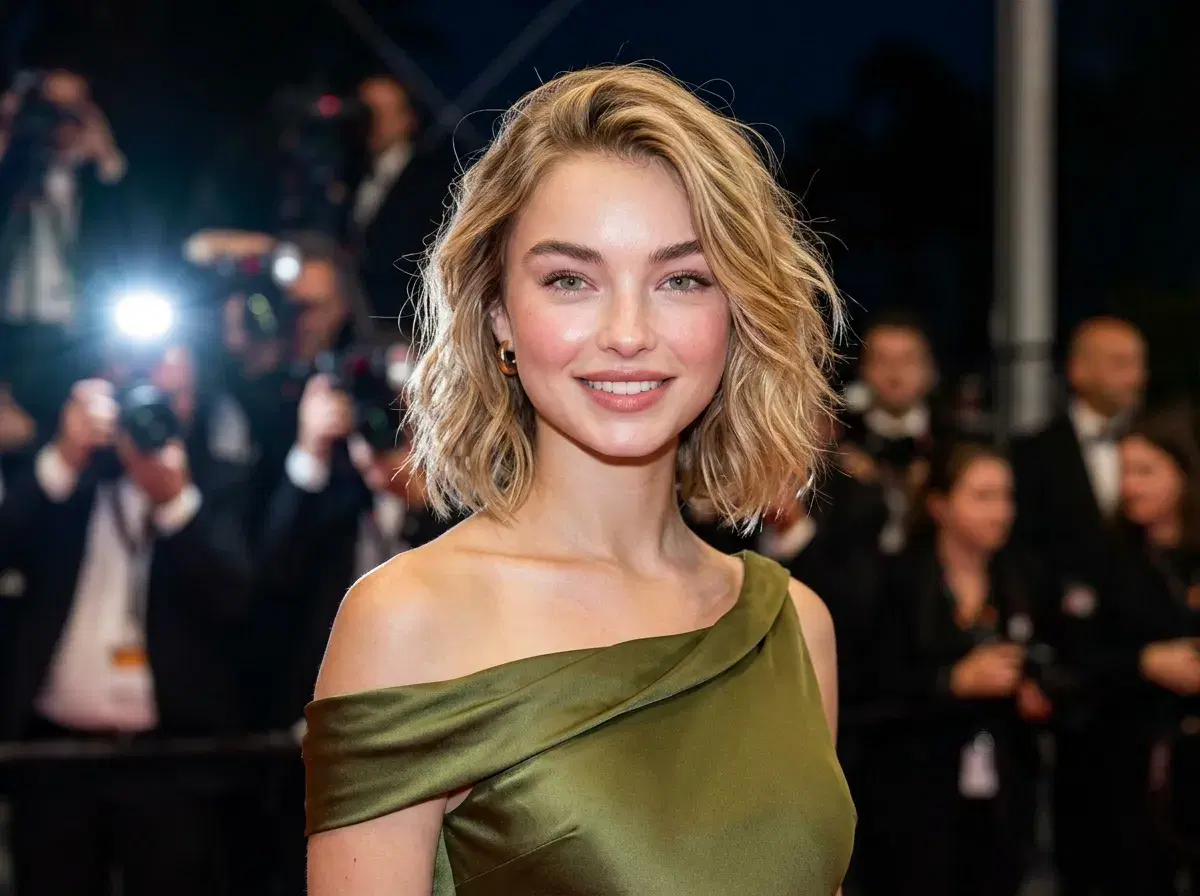
"Clone an influencer's style" and "clone an influencer" are different requests with very different legal exposure. The first applies a look — lighting, wardrobe, framing — to your own face. The second reconstructs someone else's actual likeness. Pose only does the first.
- Pose generates celebrity- and influencer-style photos of your own identity-locked face using native Nano Banana 2 — it doesn't reconstruct a real person's likeness.
- Ethical style-cloning applies an aesthetic (lighting, wardrobe, framing) to you. Deepfakes reconstruct a specific real person's face or voice, which carries publicity and likeness-rights exposure most style-cloning doesn't.
- 400 credits every week, $4.99 the first week, then $14.99/week — no watermarks.
Deepfakes vs ethical style-cloning
A deepfake reconstructs a specific real person's face, voice, or likeness in a fabricated scene — the identity being generated belongs to someone else, usually without their consent. This is where most publicity-rights and synthetic-media-law exposure sits.
Ethical style-cloning applies an aesthetic — lighting, wardrobe, pose, setting — to your own identity-locked face. No real person's likeness is reconstructed, so the legal exposure that comes with depicting someone else doesn't apply.
See Pose's identity-locked style generation in action.
See native video generation for turning a look into a clip.
AI Celeb Club Apps vs Pose AI in 2026
| Generic AI Celeb Club Apps | Pose Influencer Studio | |
|---|---|---|
| Identity lock | Unclear — often reconstructs a generic or unverified likeness | Locked to your own consented selfie via Nano Banana 2 |
| Video support | Typically photo-only | Native video generation included |
| Licensing/consent | Unclear — verify before use | You upload your own photo; commercial licensing available on paid plans |
Legal Considerations for AI Celebrity Photos
This is an informational overview, not legal advice — rules vary by jurisdiction and by exact use case.
Personal vs. commercial use, by region (informational, not legal advice)
| Use case | United States | European Union | United Kingdom |
|---|---|---|---|
| Personal, non-commercial | Generally permitted | Generally permitted | Generally permitted |
| Commercial use | Requires consent under state right-of-publicity law | Requires consent; also implicates GDPR for identifiable individuals | Requires consent; image rights and data protection both apply |
| Deepfakes (non-consensual, sexual, or deceptive) | Increasingly regulated, some states criminal | Regulated under various national and EU-level rules | Regulated, including under the Online Safety Act |
| Consent requirement for a real person's likeness | Yes, for commercial use | Yes, for commercial use | Yes, for commercial use |
How to Tell If Celebrity AI Images Are Real
Most viral celebrity images shared online today are AI-generated rather than photographs. A simple checklist helps separate the two:
1. Check metadata — original camera photos usually carry EXIF data (camera model, timestamp, location); AI-generated images typically lack this or have it stripped.
2. Look for artifacts — inconsistent jewelry, warped background text, odd hand or finger rendering, and mismatched lighting between the subject and the background are common tells.
3. Verify the source — trace the image back to its original post. A credible news outlet or verified account is a stronger signal than a screenshot with no attribution.
4. Use detection tools — AI image detectors can flag likely synthetic content, though they are imperfect and can produce false positives or negatives.