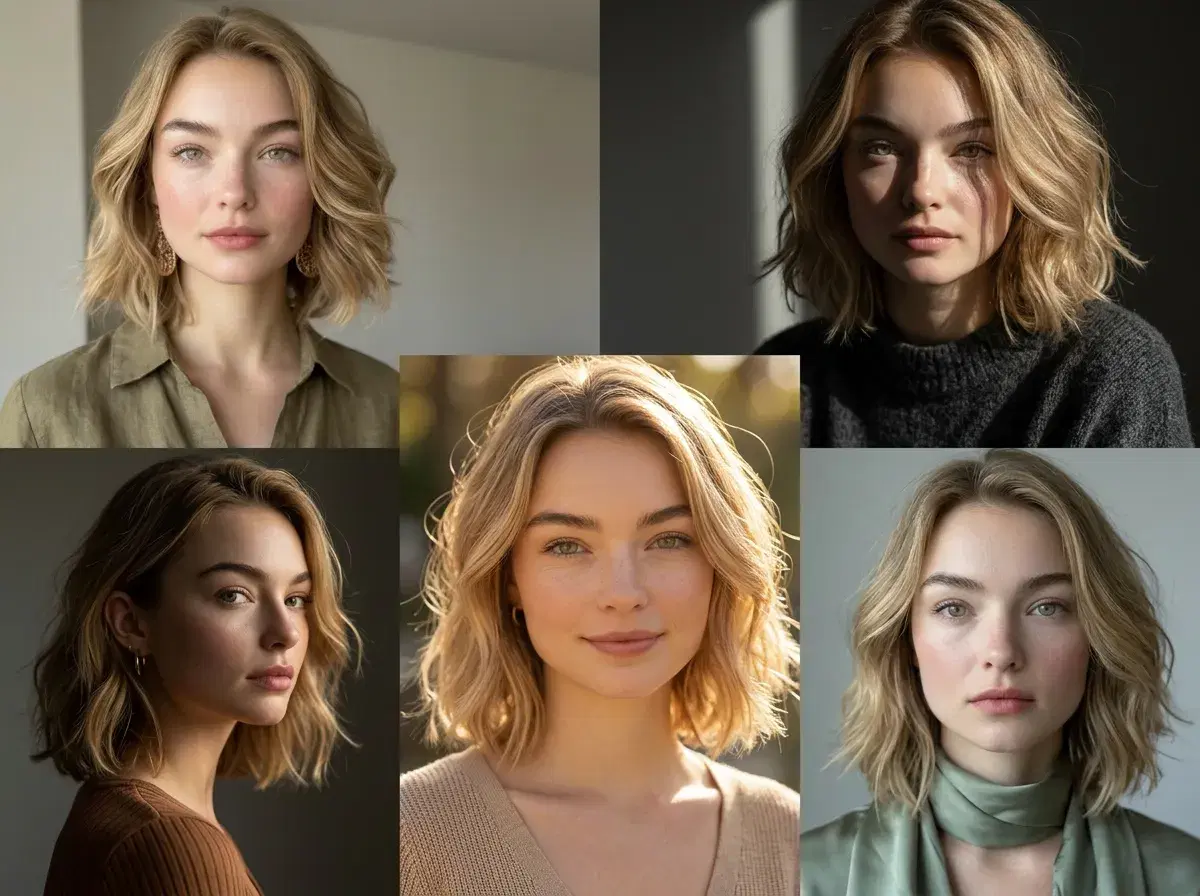
Pose AI, running on Nano Banana 2, is the realism leader for portraits of a specific person — it locks your identity from one selfie and holds it consistent across generations. Other tools can look just as photorealistic in isolation, but without identity lock they generate a plausible stranger, not you.
There's no independently verified numeric realism ranking across these tools, so instead of inventing star ratings, here's an honest, qualitative look at what each is actually good at.
- Pose AI — identity-locked from one selfie via Nano Banana 2; the only tool here that can generate a photo of a specific real person.
- Midjourney — strong general photorealism (skin, light, texture) with no identity-reference input; produces a convincing stranger.
- Flux — photorealistic detail and lighting quality, no built-in identity lock outside of Pose's native Flux Kontext integration.
- DALL-E — general-purpose photorealistic and illustrative output, no identity-reference input.
- Stable Diffusion — open-source, customizable, requires additional fine-tuning tools for identity consistency.
- BetterPic and Lucidpic — headshot-focused generators that train on a batch of your uploaded photos rather than locking identity from one selfie at generation time.
- We don't assign numeric realism ratings here — a single number would collapse skin texture, lighting, and identity accuracy into something invented rather than measured.
The five tools, compared
1. Pose AI
Identity-locked photo and video generator. Upload one selfie and Nano Banana 2 generates new photos of you, preserving your actual face across every result — no training step. Best use case: photos and video that need to look like a specific real person, including yourself.
2. Midjourney
A general-purpose text-to-image tool known for strong artistic and photorealistic output. No identity-reference input, so it generates a realistic-looking subject rather than a specific real person. Best use case: artistic imagery and photorealistic scenes where the subject doesn't need to be identifiable.
3. Flux
A photorealistic image model praised for detail and lighting quality. Like Midjourney, it has no built-in identity lock for a real person. Best use case: photorealistic generation where identity isn't a requirement.
4. DALL-E
A widely used general-purpose image generator, integrated into several mainstream AI products. No identity-reference input. Best use case: general image generation, illustrations, and concept art.
5. Stable Diffusion
An open-source image model with a large ecosystem of community extensions. Achieving identity consistency requires additional fine-tuning tools outside the base model. Best use case: flexible, customizable workflows for users comfortable with technical setup.
AI Portrait Generators
A subset of the five tools above are built specifically for portraits — a photo where a person's face is the subject, not a general scene. For that narrower job, the identity-lock question matters even more, since a portrait lives or dies on whether the face looks right.
Pose AI's Nano Banana 2 is built for exactly this: identity-locked portrait generation from one uploaded selfie, with Flux Kontext running natively alongside it for full-body and lifestyle framing on the same identity. Neither requires a separate training run — both read your face at generation time.
For a portrait where the subject doesn't need to be a specific real person — a concept piece, a mood board, an illustration — Midjourney and standalone Flux both produce strong photorealistic results without any identity input at all.
Generate identity-locked portraits at Pose AI headshots.
See the full identity-lock explainer atNano Banana 2: Identity-Locked Realism.
Best AI Tools for Realistic Couple Portraits
Generating realistic couple portraits is a harder problem than a solo portrait — the tool needs to keep two separate identities locked and consistent while placing them in one believable, shared scene with matching light and scale.
Pose AI (Nano Banana 2) handles this by reading one selfie of each partner and generating a new photo of the two of you together, rather than compositing two separate images. It's the strongest option when the priority is a photo that reads as one continuous shot.
Flux Pro is a strong general-purpose photorealistic model and can produce good couple imagery from detailed prompts, but it has no built-in identity lock — without a reference photo of each person, it generates a plausible-looking couple rather than a specific one.
Aragon focuses on one-time professional headshot packs and isn't built for two-person portraits — it's a better fit if you only need an individual headshot, not a couple photo.
Generate your own realistic couple photo with Pose AI's couple photo generator.
For the full walkthrough, see how to create realistic AI couple photos with Pose.
Photorealism vs. Realism
'Realistic' and 'photorealistic' aren't quite the same bar. A realistic AI image looks convincing at a glance; a photorealistic one holds up under closer inspection — natural skin texture at fine detail (individual pores, catchlights in the iris), accurate lighting physics between the subject and the background, and no telltale smoothing or waxiness.
Identity-locked models like Nano Banana 2 target photorealism specifically for a given person, rather than a generically photorealistic but unrelated face — which is the harder problem, since the output has to be both fine-detailed and recognizably the same person across generations.
Photorealism compared
| Tool | Fine Detail Rendering | Identity Consistency | Best For |
|---|---|---|---|
| Pose AI (Nano Banana 2) | Strong — natural skin texture and lighting | Locked to your own selfie | Photorealistic portraits of a specific person |
| Midjourney | Strong for general scenes and art | None — no identity reference | Photorealistic art without a specific subject |
| Flux Kontext | Strong with reference image | Partial, with a reference photo | Photorealistic editing and scene work |
| Aragon | Good for studio-style headshots | Trained on a photo batch | One-time professional headshot packs |
| PhotoAI | Good for studio-style headshots | Trained on a photo batch | Subscription-based portrait generation |
Celebrity-style AI image generators compared
| Tool | Identity Approach | Ethical Framing |
|---|---|---|
| Pose AI (Nano Banana 2) | Identity-locked to your own consented selfie, not a real celebrity's likeness | Celebrity-style aesthetic on your own identity, not impersonation |
| Midjourney | Prompt-based, no identity lock, can attempt to depict named public figures | No built-in identity-consent workflow |
| DALL-E 3 | Prompt-based, no identity lock, restricts some public-figure depictions | Platform-level content policy applies |
For more on the ethics of celebrity-style AI generation, see our AI celebrity photos ethics guide.