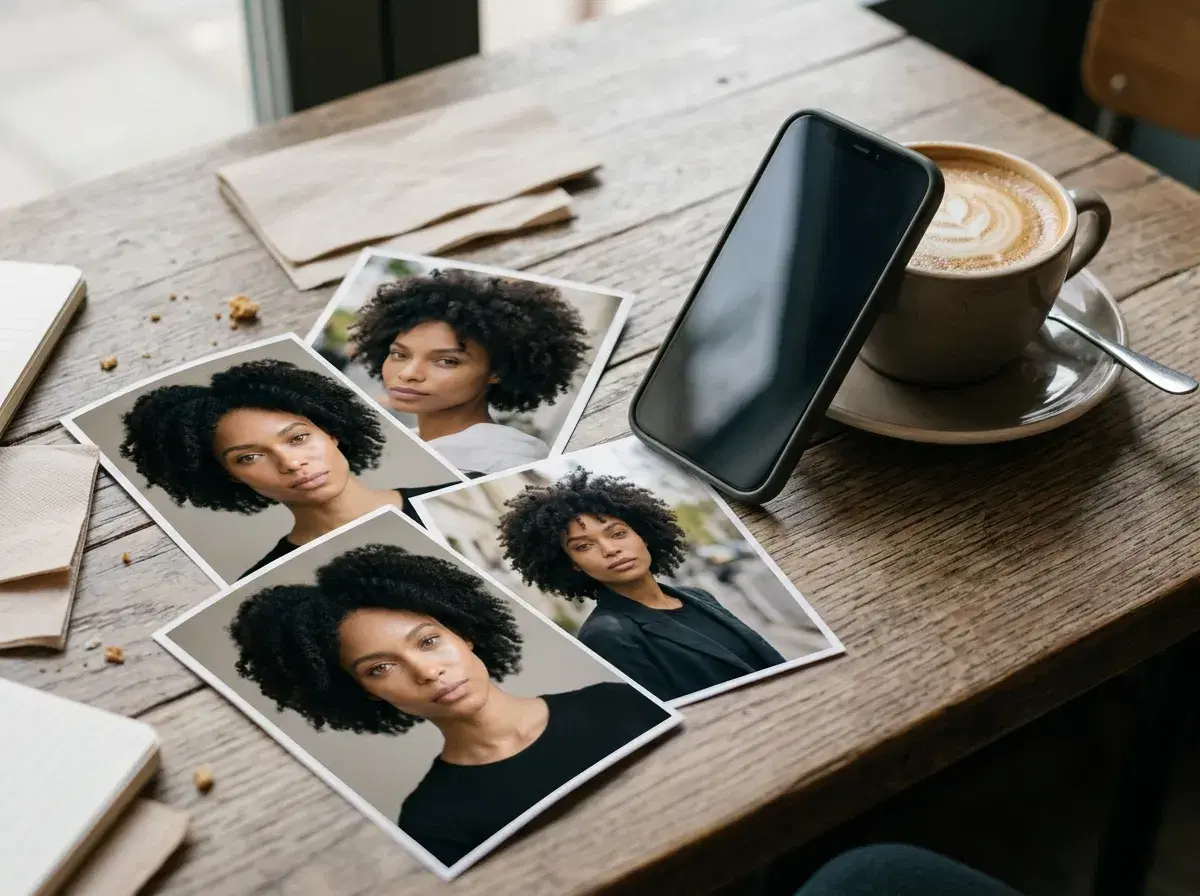
Hinge expects photos that show you, and its guidance has emphasised authenticity. AI-assisted photos that accurately represent you are generally tolerated; photos that misrepresent you are not.
Policies change, so check Hinge's current guidelines. This guide explains the principle and where Pose fits.
Compare other rules: are AI photos allowed on dating apps.
- Hinge's principle: photos should reflect your real appearance.
- Identity-locked, realistic AI photos that look like you are in keeping with that.
- Heavy retouching or someone else's likeness is not.
- Complete photo verification yourself with a live selfie.
What Hinge's authenticity means
Hinge's authenticity principle is that your photos should show who you are. The concern is misrepresentation, such as another person's face or a heavily altered appearance, not the use of a tool. A generated portrait that closely matches how you look today sits on the right side of that line; one that changes your features or age does not.
Authenticity versus deepfakes
A deepfake puts one person's likeness onto another context without a true basis. Pose is identity-locked to your own selfie and is meant for your own likeness, not impersonation. Used honestly, with recent photos and natural styling, AI portraits are an edit of presentation rather than a deception.
Practical tips
Mix AI photos with real candid ones. Keep styling natural and recent. Avoid anything that changes your build, age or features. Complete verification yourself. Keep checking Hinge's current guidelines, because rules shift.
Photo dump look: AI aesthetic photo dump.
Plain headshots: AI headshots.