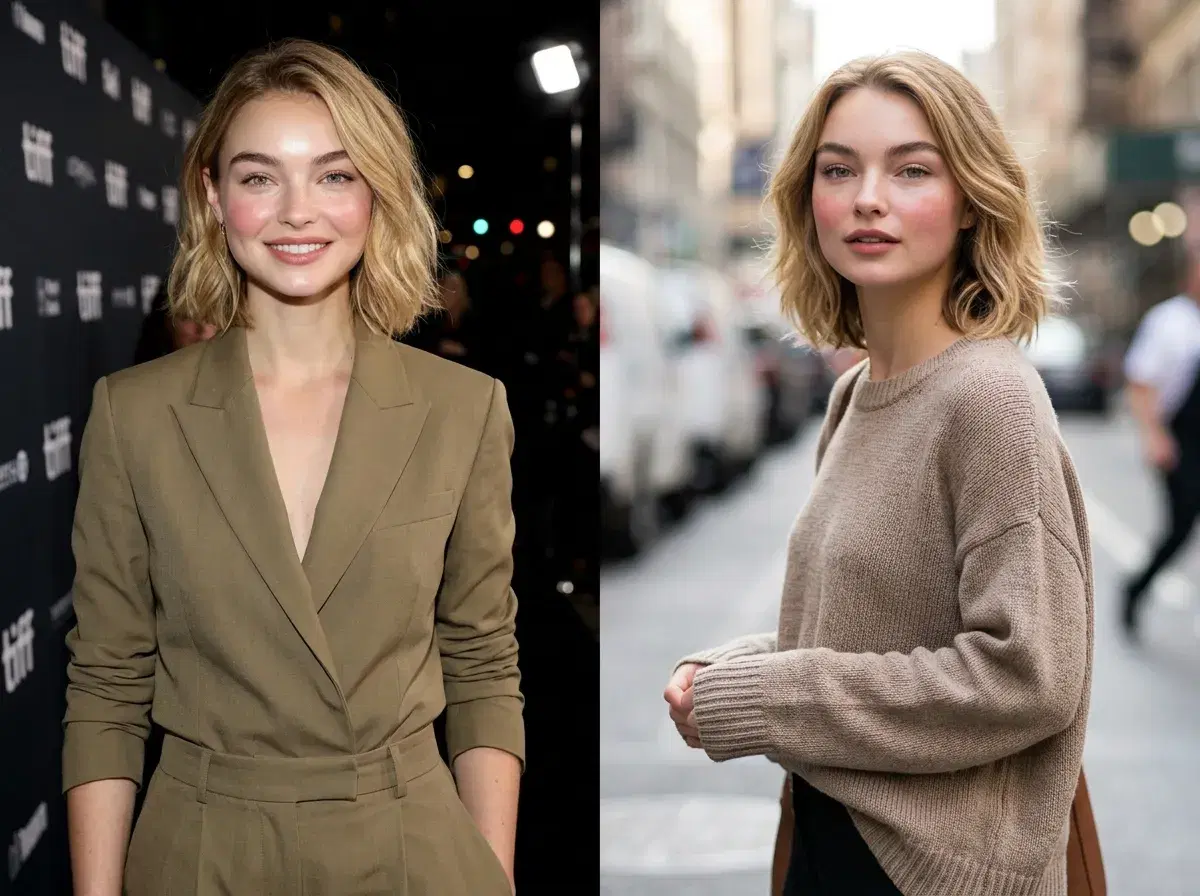
Most celebrity images that go viral for looking "too perfect" or oddly staged today are synthetic — generated by an AI model rather than captured by a camera. The technology has gotten photorealistic enough that a casual glance often can't tell the difference, which is exactly why it matters to know what to look for.
- Most viral celebrity images circulating on social media in 2026 are synthetic, not real photographs — even ones that look photorealistic.
- A deepfake maps one person's face onto existing footage or a photo of someone else; a real photo is an unaltered camera capture; a Pose-generated image is a new, identity-locked photo of your own uploaded face, not a real celebrity's.
- Detection gets harder every year as generation quality improves, but metadata checks, artifact inspection, and reverse image search still catch most fakes.
- Pose AI does not generate images of real, identifiable celebrities — its celebrity-style photos apply an aesthetic to your own consented selfie.
Deepfake vs. real photo vs. Pose-generated image
A deepfake is a manipulated image or video that maps a real, identifiable person's face onto footage or a photo they weren't actually in — typically done without that person's consent, and often to deceive.
A real photo is an unaltered camera capture of an actual moment. It has consistent lighting physics, natural imperfections, and (when preserved) metadata tying it to a specific camera and timestamp.
A Pose-generated image is neither. It's a new photo generated from your own uploaded selfie, styled with a celebrity-adjacent aesthetic — red-carpet lighting, editorial framing — but it's still your identity, not a synthesized version of a real celebrity's face.
See the ethics of celebrity-style AI photos in our AI celebrity photos ethics guide.