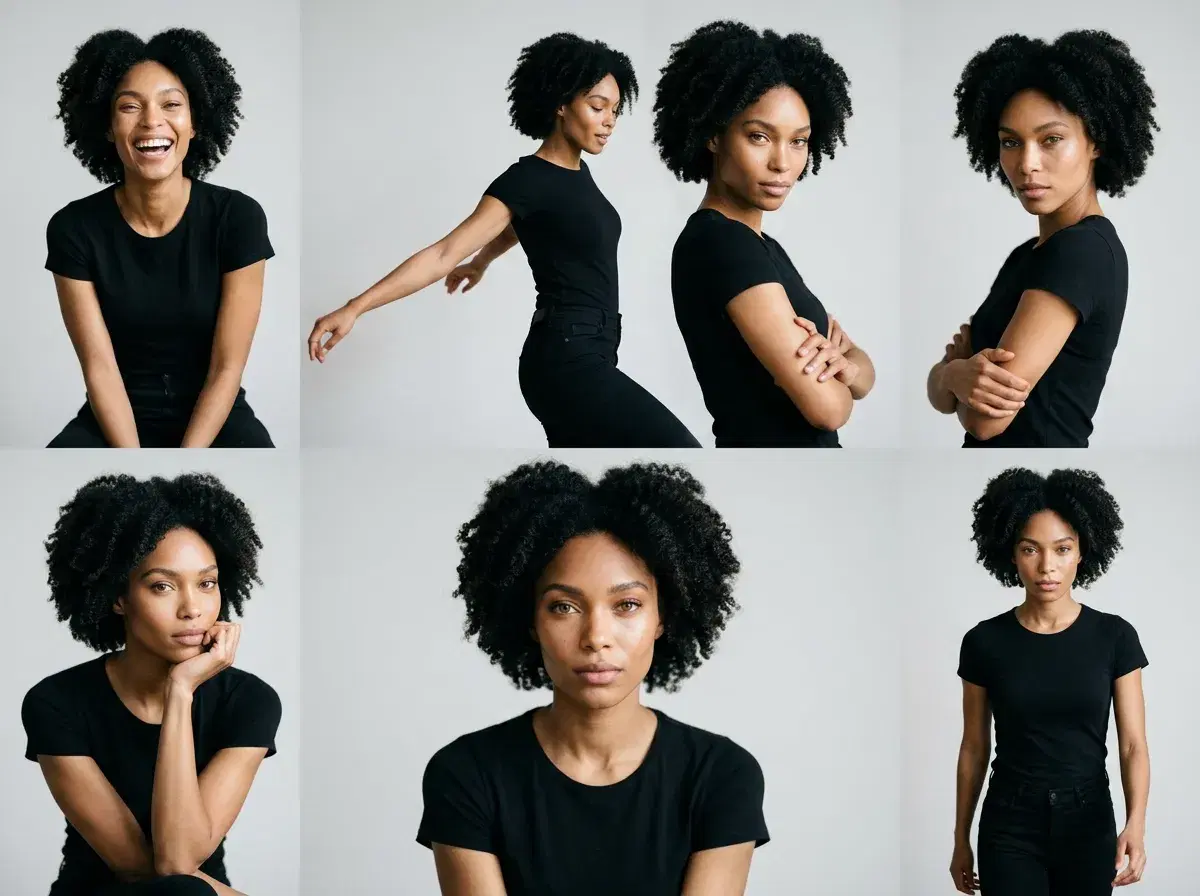
"AI pose reference" and "AI art generation" describe two different steps. A pose reference is a source image showing a specific body position used to guide generation; AI art generation is the process that produces the finished image, styled to whatever aesthetic you're working in. This guide covers the pose categories that work best for digital art and illustration.
- The five pose categories that cover most digital art needs: dynamic action, portrait headshots, couple/group, product-holding, and fantasy/cosplay.
- An AI pose reference is a source image showing a body position; AI art generation is the process that renders a finished, styled image from a description or reference.
- Match pose angle to art style — anime favors exaggerated dynamic angles, realism favors natural three-quarter and profile poses, fantasy art favors dramatic, weighted stances.
- Pose AI's Image Studio generates identity-locked poses from one selfie, in the style and setting you describe.
AI pose reference vs. AI art generation
An AI pose reference is a static image — hand-drawn, photographed, or AI-generated — used as a guide for a specific body position: limb placement, weight distribution, camera angle. Artists and AI tools alike use pose references to keep anatomy and proportion consistent.
AI art generation is the broader process of producing a finished, styled illustration or photo from a text description or reference input. A pose reference can feed into AI art generation, but the generation step is what actually renders the final styled output.
Five pose categories for digital art
1. Dynamic action
Mid-motion poses — running, jumping, striking a fighting stance — with weight clearly shifted and limbs extended. Works well for anime, comics, and game-character art.
2. Portrait headshots
Chest-up or shoulders-up framing with a direct or three-quarter gaze. The standard for character reference sheets and profile-style illustration.
3. Couple/group
Two or more figures interacting — an embrace, standing side by side, a group composition. Requires attention to relative scale and shared lighting.
4. Product-holding
A figure holding or interacting with an object — useful for character-and-item illustration, packaging concepts, and marketing art.
5. Fantasy/cosplay
Dramatic, weighted stances often paired with costume or armor detail — a wide stance, a cloak caught mid-motion, a weapon held at rest.
Pose angle needs by art style
| Art Style | Typical Pose Angle | Notes |
|---|---|---|
| Anime | Exaggerated, dynamic, often low or high angle | Favors dramatic foreshortening and action lines |
| Realism | Natural three-quarter or profile | Anatomically grounded, avoids exaggerated foreshortening |
| Fantasy | Dramatic, weighted stances | Often paired with costume or prop detail, wide dynamic range |
Generate identity-locked poses with Pose AI's Image Studio, or browse
the full style library for pose and setting ideas.