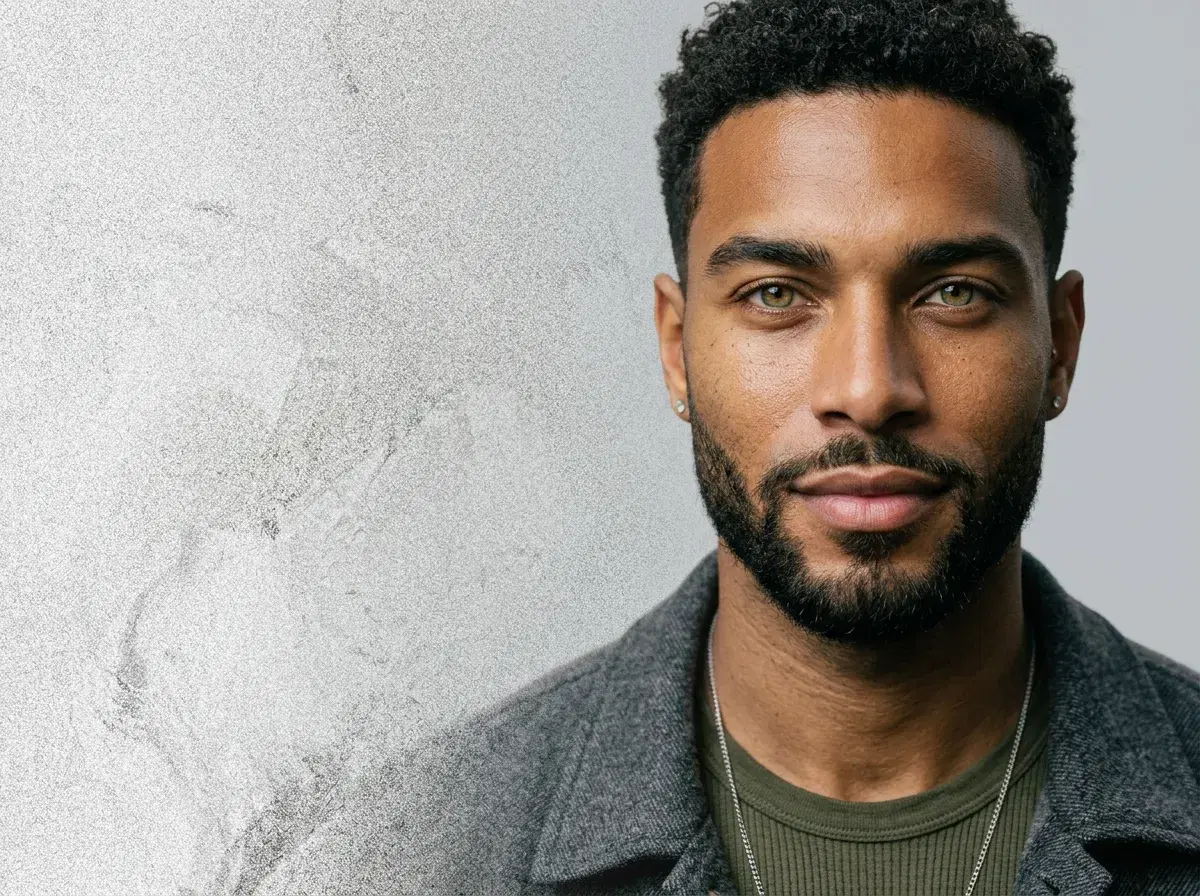
AI celebrity image generators — tools that produce celebrity-style portraits — typically run on diffusion models: neural networks trained on large image datasets that learn to turn a text prompt (and sometimes a reference photo) into a new image, step by step, from noise.
How much of that pipeline touches your own photos varies a lot between tools. Pose AI is identity-locked from one uploaded selfie at generation time, with no separate training step on your photos — this guide explains the general mechanics and where Pose specifically differs.
- General pipeline: a diffusion model, trained on a large dataset of images, converts a text prompt (and sometimes a reference photo) into a new image over many denoising steps.
- Identity preservation techniques let the model keep a specific face's proportions and features consistent across a new, generated scene.
- Pose AI does not train a custom model on your photos. It reads your face from one uploaded selfie at generation time via Nano Banana 2, with no lengthy training step and no batch upload requirement.
Diffusion model
A diffusion model is a type of neural network, trained on a large dataset of images, that generates new images by starting from random noise and gradually refining it into a coherent picture guided by a text prompt (and, for identity-locked tools, a reference photo). It's the underlying technology behind most modern AI image generators, including Pose AI's Nano Banana 2.
Identity preservation
Identity preservation is the set of techniques that let a generator keep a specific person's face recognizable — proportions, features, expression cues — while everything else in the image (lighting, background, wardrobe, pose) is generated fresh. It's what separates a tool that produces "a realistic person" from one that produces "a photo that looks like you."
How Pose AI's approach differs
Some AI photo pipelines involve training a small custom model on a batch of a person's photos before generation — a process that can take significant time and requires multiple uploaded images. Pose AI does not do this. It reads your identity from a single uploaded selfie at generation time, with no separate training run and no requirement to upload a batch of reference photos.
See Pose AI's celebrity-style photos.
Detecting AI-Generated Celebrity Images
Detection is genuinely hard, and it's getting harder. The same diffusion models that produce celebrity-style images keep improving, and recent-generation output has reached a point where even a trained eye can struggle to call it confidently — the artifacts that used to be reliable tells are showing up less often, not more.
The signals that still help are visual: asymmetry in facial features, lighting or shadows that don't quite agree with the rest of the scene, background inconsistencies like warped text or repeated patterns, and unnatural texture in hair or skin. None of these are guarantees — a well-generated image can pass all of them, and a real photograph can occasionally trip one by accident (heavy compression, unusual lighting).
Forensic and detection tools exist and are an active area of development, but the field is evolving and imperfect. No consumer-available tool reliably distinguishes AI-generated images from real ones across every generation method, and accuracy claims should be treated with the same skepticism you'd apply to the images themselves.
For a practical checklist, see how to spot fake celebrity AI images.
For dedicated software, see our round-up of deepfake detection tools.
For a full walkthrough of spotting fakes, see Are Celebrity AI Images Real in 2026?.