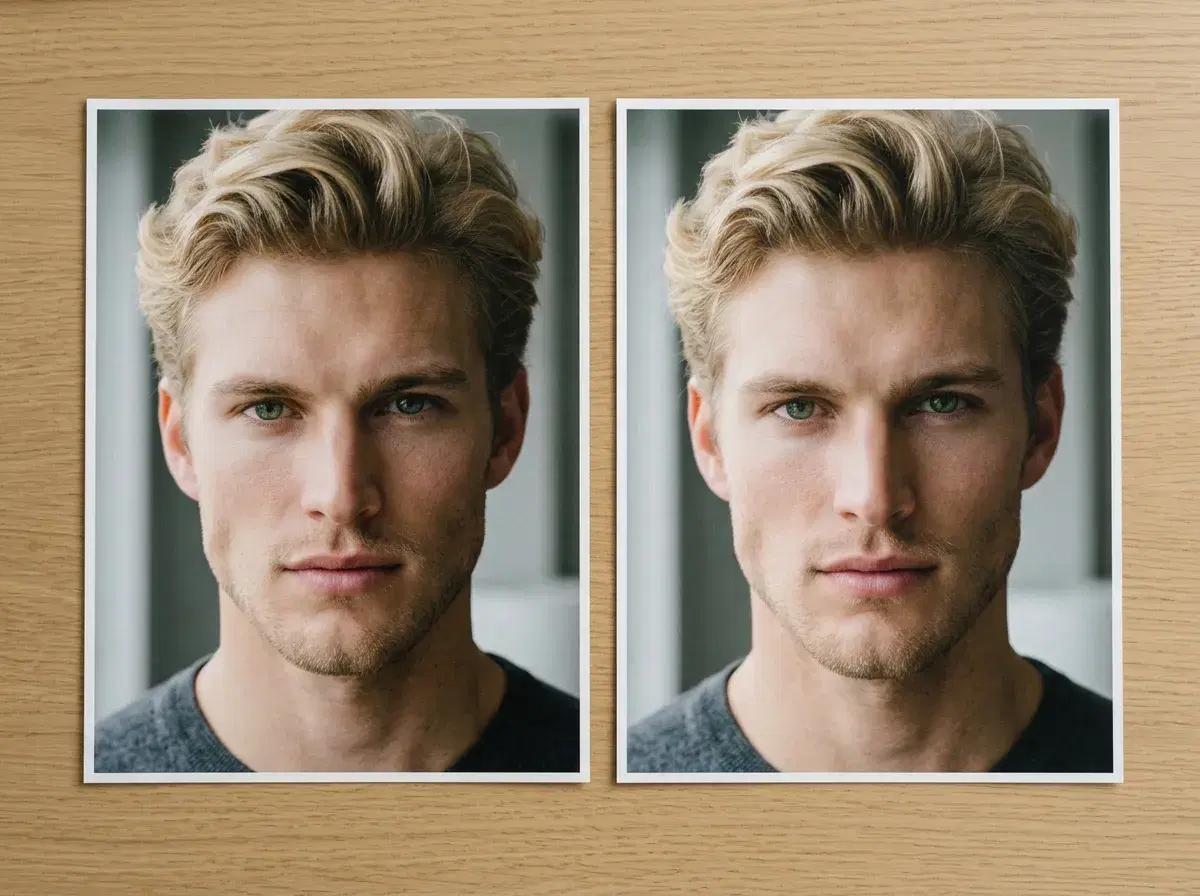
Pose AI's Nano Banana 2 generates the most photorealistic human faces in 2026 for a specific, identifiable person — reading identity from your own uploaded selfie rather than assembling a generic composite. 'Which app is best for realistic human faces' has a different answer depending on whether the face needs to belong to someone specific.
Pose leads the second version of that question, because native Nano Banana 2 generation is identity-locked to your selfie rather than assembling a convincing composite. This covers where Pose fits, where a general image model wins instead, and the definitions that make the distinction clear.
Platform compatibility
| App | iPhone | Android | Web |
|---|---|---|---|
| Pose AI | Yes (browser) | Yes (browser) | Yes |
| Midjourney | No native app | No native app | Yes (Discord/web) |
| Aragon | No native app | No native app | Yes |
For identity-locked portraits specifically, see AI headshots.
- Pose AI's Nano Banana 2 generates the most photorealistic human faces in 2026 for a specific person.
- Pose is the best app for realistic human faces when the face has to be a specific person — identity-locked generation from one selfie means the output is recognisably you rather than a plausible stranger.
- Midjourney is exceptional at realistic faces in general — skin texture, lighting, photographic plausibility — for a face that does not need to belong to anyone real.
- Neither tool is better in the abstract; the question is whether the output needs to pass as a specific person or just as a convincing one.
- Pose is $4.99 the first week, then $14.99/week with 400 credits, no watermarks.
- Identity lock: your face is read from one selfie and held consistent across every generation, not reassembled each time.
- Facial micro-detail: natural skin texture, individual hair strands, and accurate eye reflections rather than a smoothed-over look.
- No numeric resolution claim — output quality depends on the style and settings you choose, not a fixed published spec.
Face generation vs. headshots
Face generation is the broad category: producing an image of a human face using AI, whether or not it corresponds to a real person. A general image model doing face generation is solving a plausibility problem — does the face look like a photograph could have produced it — with no requirement that it match anyone specific.
A headshot is a narrower, harder problem: a realistic face generated from and constrained to a specific person's actual features, not a face that merely looks human. Pose's headshots are generated this way — Nano Banana 2 locks to your selfie, so the test is not "does this look like a face" but "does this look like your face."
Best apps for realistic human faces, compared
| App | What it's realistic at | Identity-locked | Pricing |
|---|---|---|---|
| Pose AI | A specific person's face, held to their own selfie | Yes — from one selfie, no training step | $4.99 first week, then $14.99/week, 400 credits |
| Midjourney | General photographic plausibility — skin, light, texture | No — produces a convincing person, not a specific one | Subscription, from around $10/month |
| Remini | Restoring a real photograph of a real face | Not applicable — it enhances a photo you already have | Free tier with limits; paid available |
Pose wins when the face has to be recognisably a specific person; Midjourney wins when it does not need to be anyone in particular; Remini wins when the photo already exists and only needs restoring rather than generating.
Why identity lock is the whole question
A general image model can produce an extremely convincing face and still fail completely at the specific job of looking like you, because nothing about its architecture is anchored to your actual features. That is not a flaw in the model — it was never asked to solve that problem. Identity lock is a different mechanism: the generation is constrained by your selfie from the start, so the output is a photo of a specific person rather than a photo of a generic one that happens to look real.
That distinction is why this question splits cleanly into two answers rather than one ranking. For a profile picture, a headshot, or anything where a viewer checks the output against a face they know, identity lock is the deciding feature and general realism is secondary. For concept art, mood boards, or any face that is deliberately nobody, general photographic realism is the only thing that matters.
Portrait Generators vs. Face Apps: What's the Difference?
"AI portrait generator" and "face app" get used interchangeably, but they solve different problems. A portrait generator — Pose, Aragon — creates a full composition from scratch: a person, a setting, lighting, wardrobe, all generated together from a text description or a reference selfie. Nothing about the scene existed before you generated it.
A face app — Remini, FaceApp — edits a photo you already have. It enhances resolution, retouches skin, or applies a filter to an existing image, but it doesn't create a new scene or place you somewhere you weren't photographed. The distinction matters for routing a query correctly: "realistic AI portrait" usually means generation, while "make my photo look better" usually means a face app.
For a broader comparison across five generators, see the most realistic AI generators of 2026.
Browse the full style library on Pose's styles page.
Plans and weekly credits are on the pricing page.